
Description
The organized record your legal counsel will ask for.
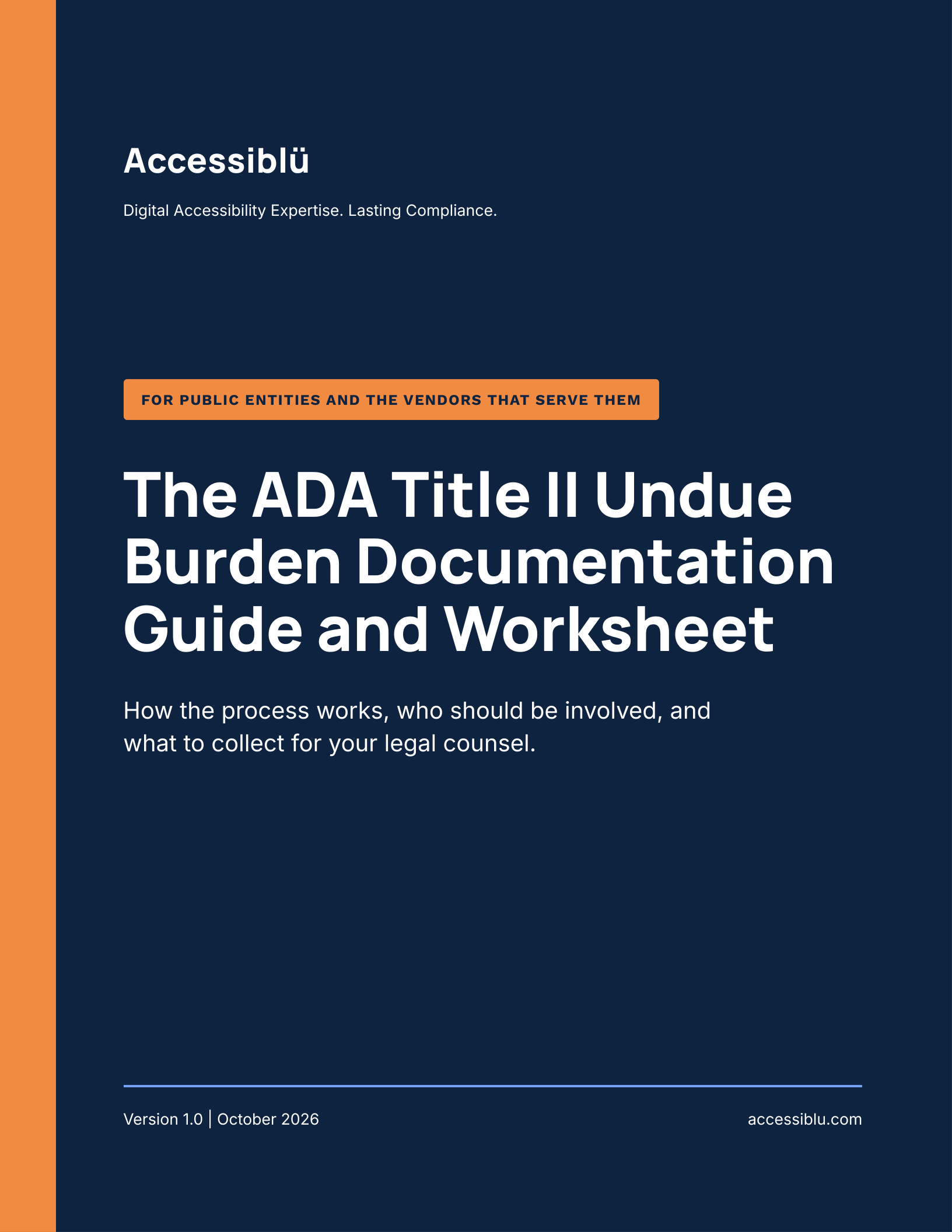
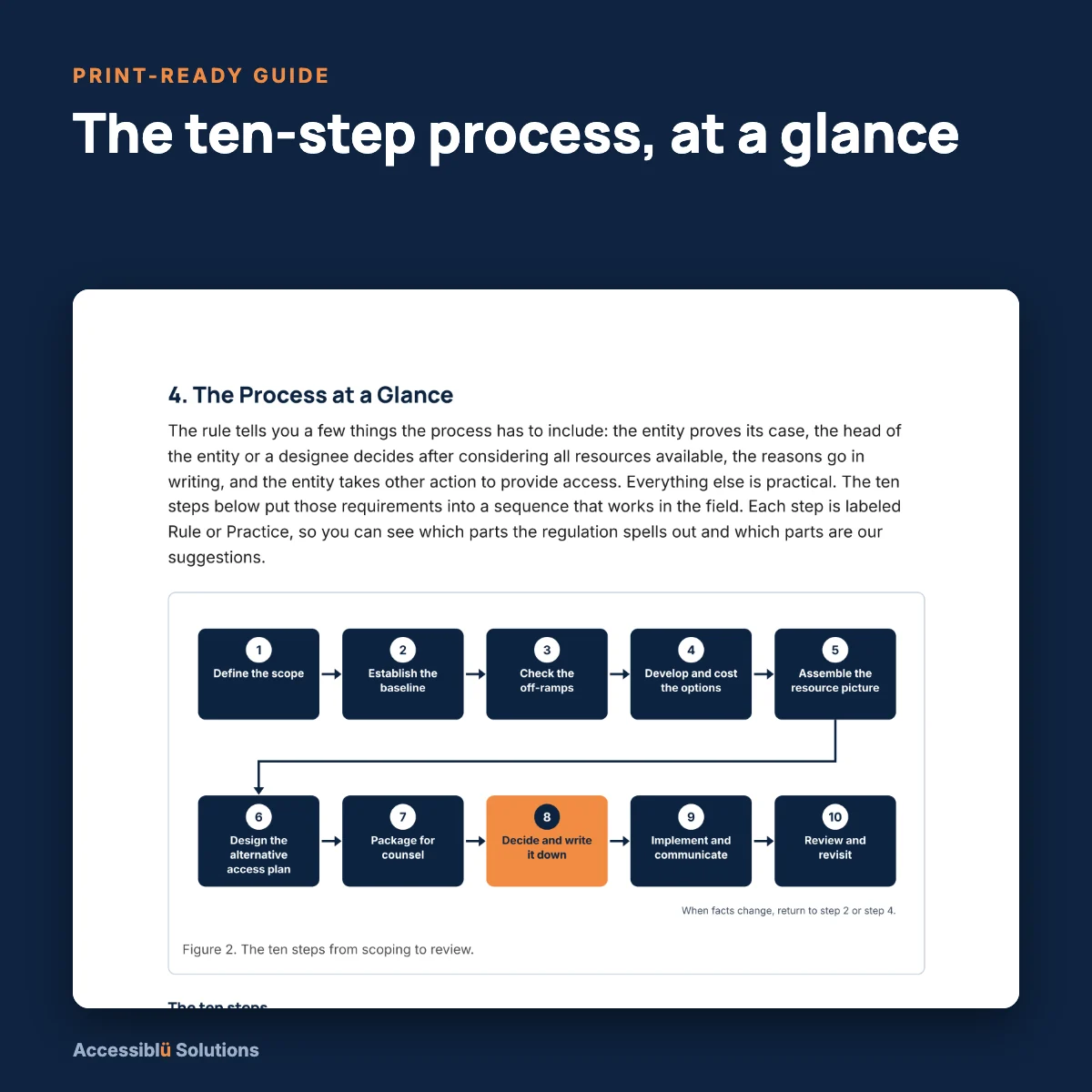
Whether an ADA Title II requirement is an undue burden, or a fundamental alteration, is a legal decision for the public entity and its counsel. What makes that conversation possible is a clear, organized record: what the service is, what the barriers are, what the options and costs would be, who decided, and why. This guide shows how the process works, who should be involved, and what to collect. The worksheet turns it into a tracker you can assign, date and hand to your counsel.
What you get
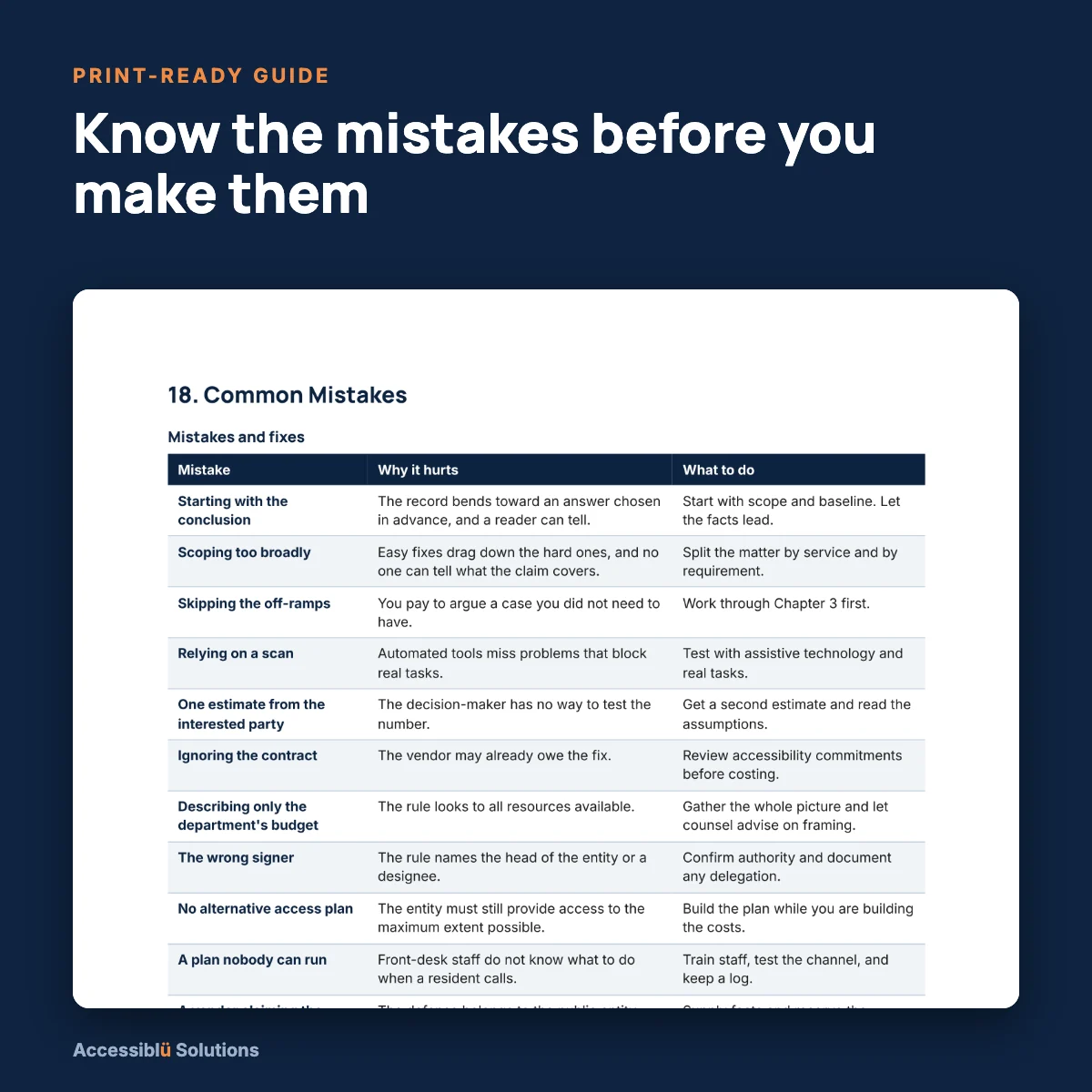
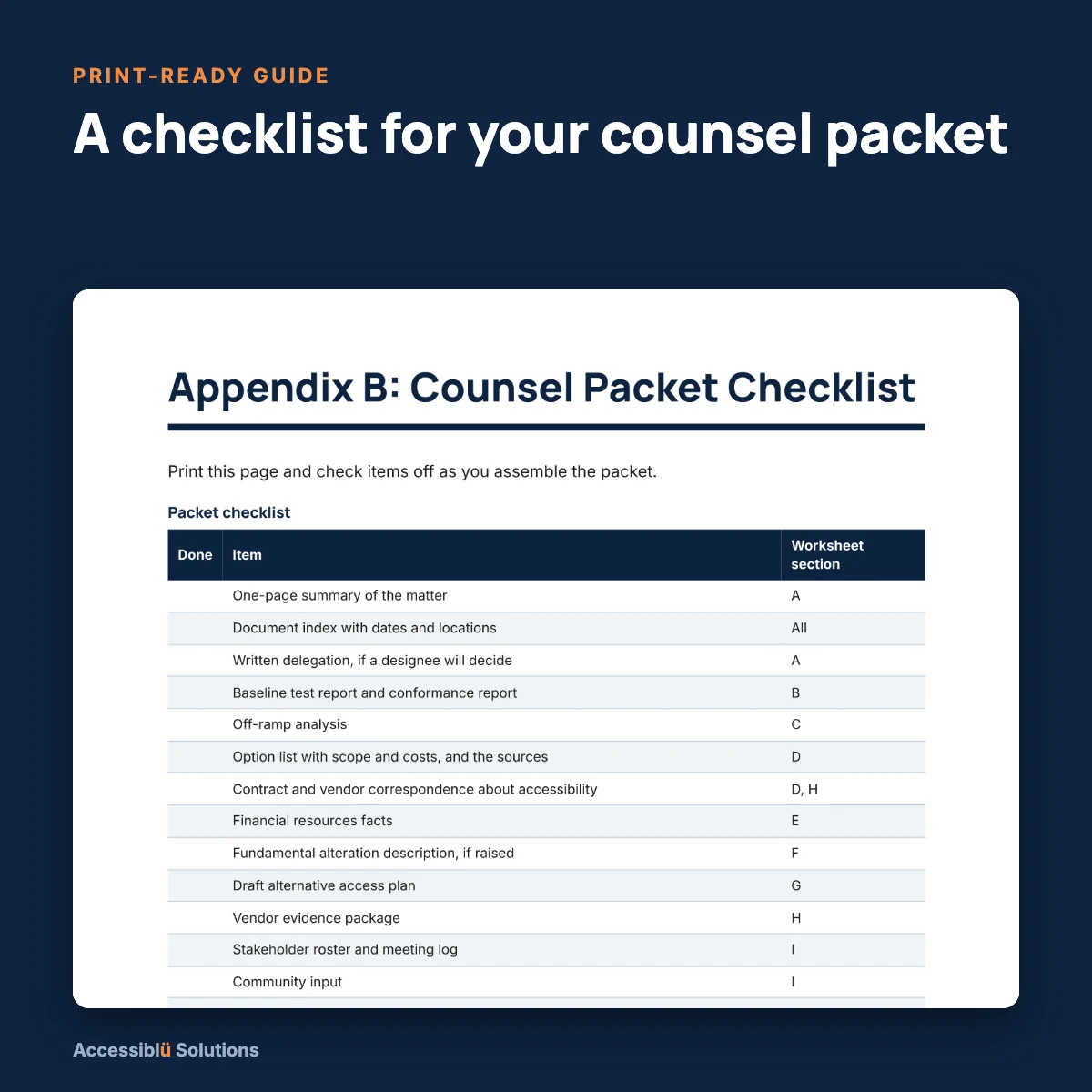
- The Guide, 86 pages. Twenty chapters in seven parts: foundations, the ten-step process, the people involved, the evidence, agencies and vendors working together, working with counsel, and using the worksheet. Plus six appendices: a quick reference, a counsel packet checklist, questions for your counsel, a glossary, sources and further reading, and a sample request.
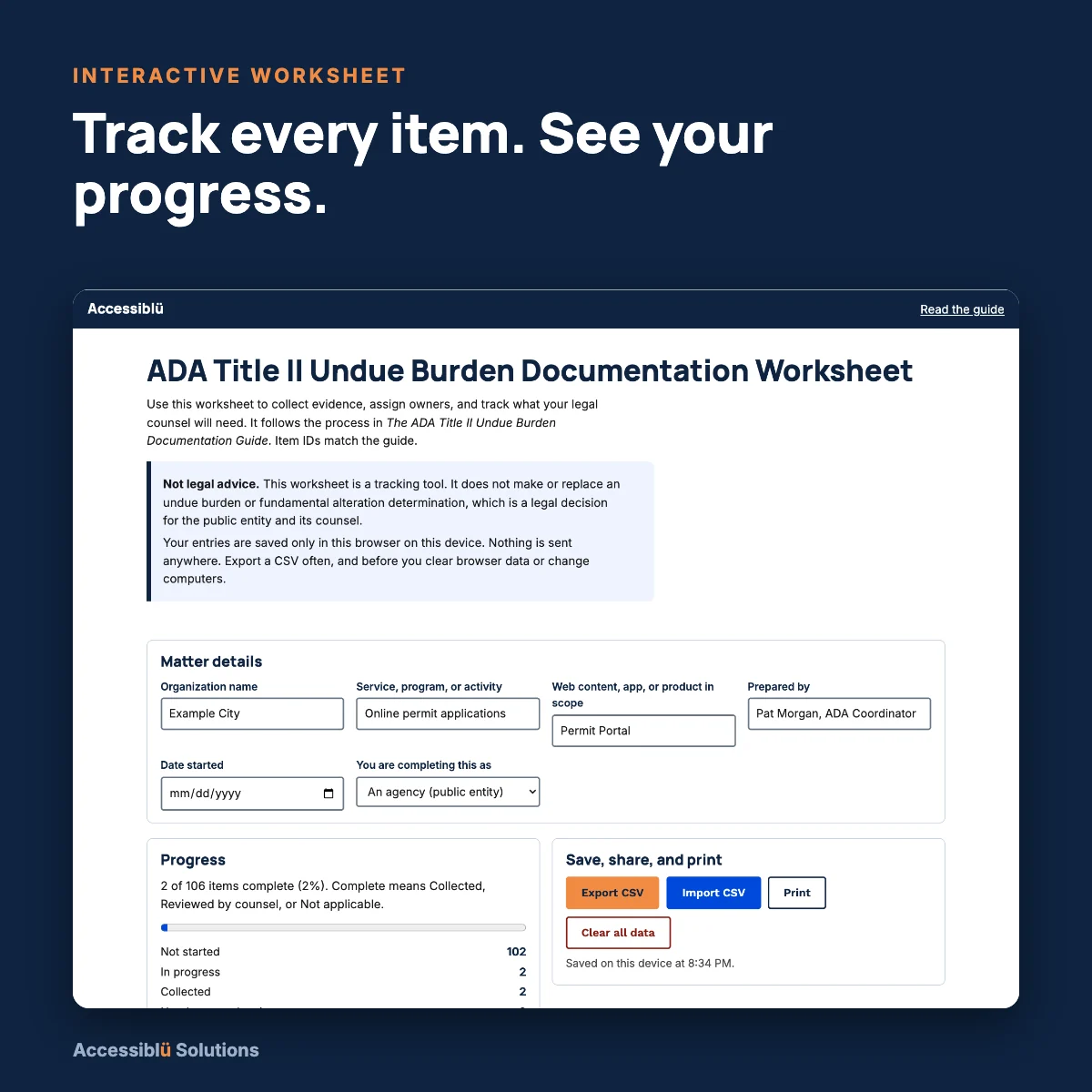
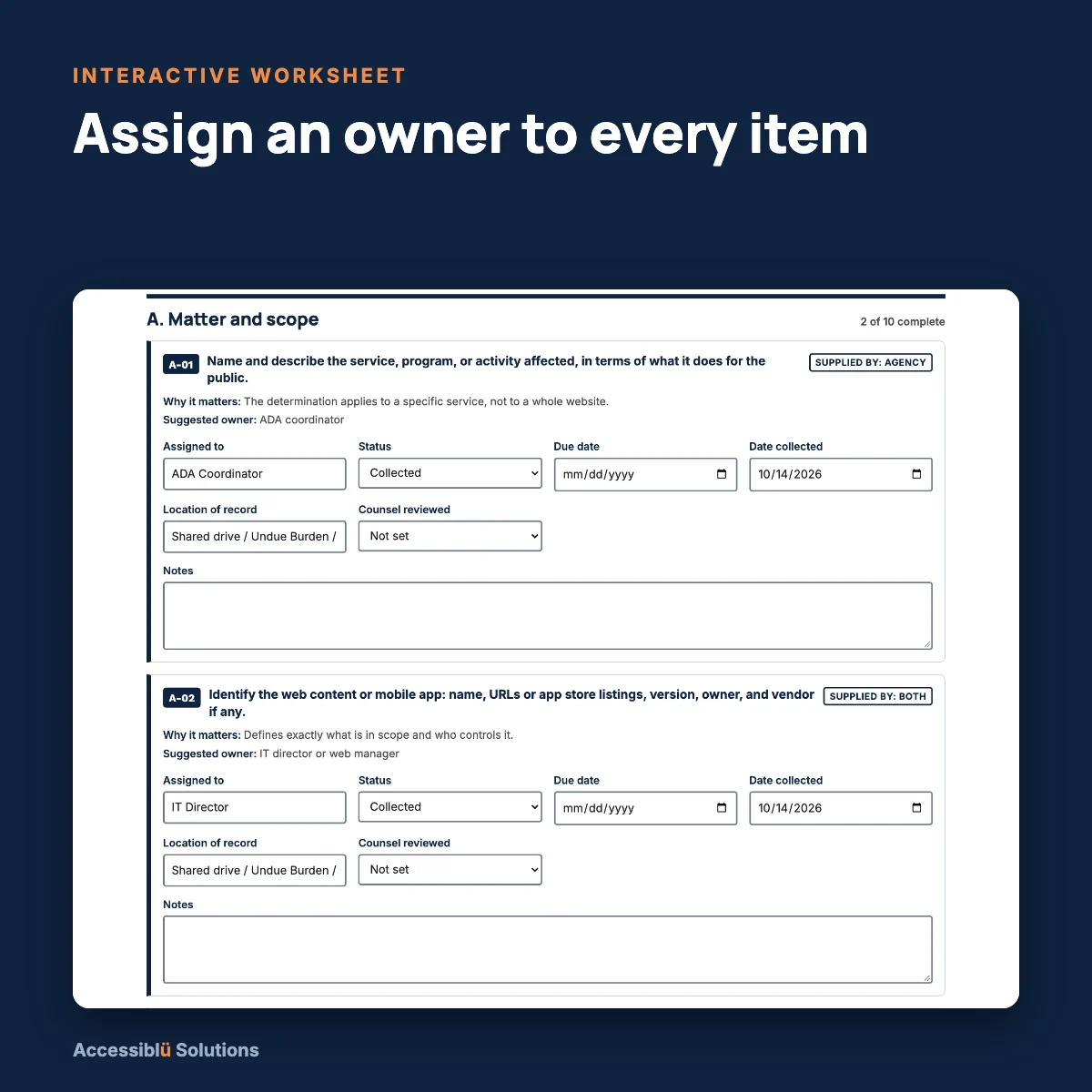
- The Worksheet, 106 items. Ten sections, from the matter and scope through baseline and barriers, off-ramps, options and costs, financial resources, the alternative access plan, the vendor evidence package, people and process, and the decision and written statement. Each item says why it matters and who usually supplies it, then lets you record an owner, status, due date, date collected, where the record lives, whether counsel has reviewed it, and notes. Item IDs match the guide.
For public entities and the vendors that serve them
There are chapters written for vendors, chapters for agencies working with vendors, and worked examples, so each side can see what the other will be asked for. The worksheet asks whether you are completing it as an agency, a vendor, or counsel or a consultant.
Formats
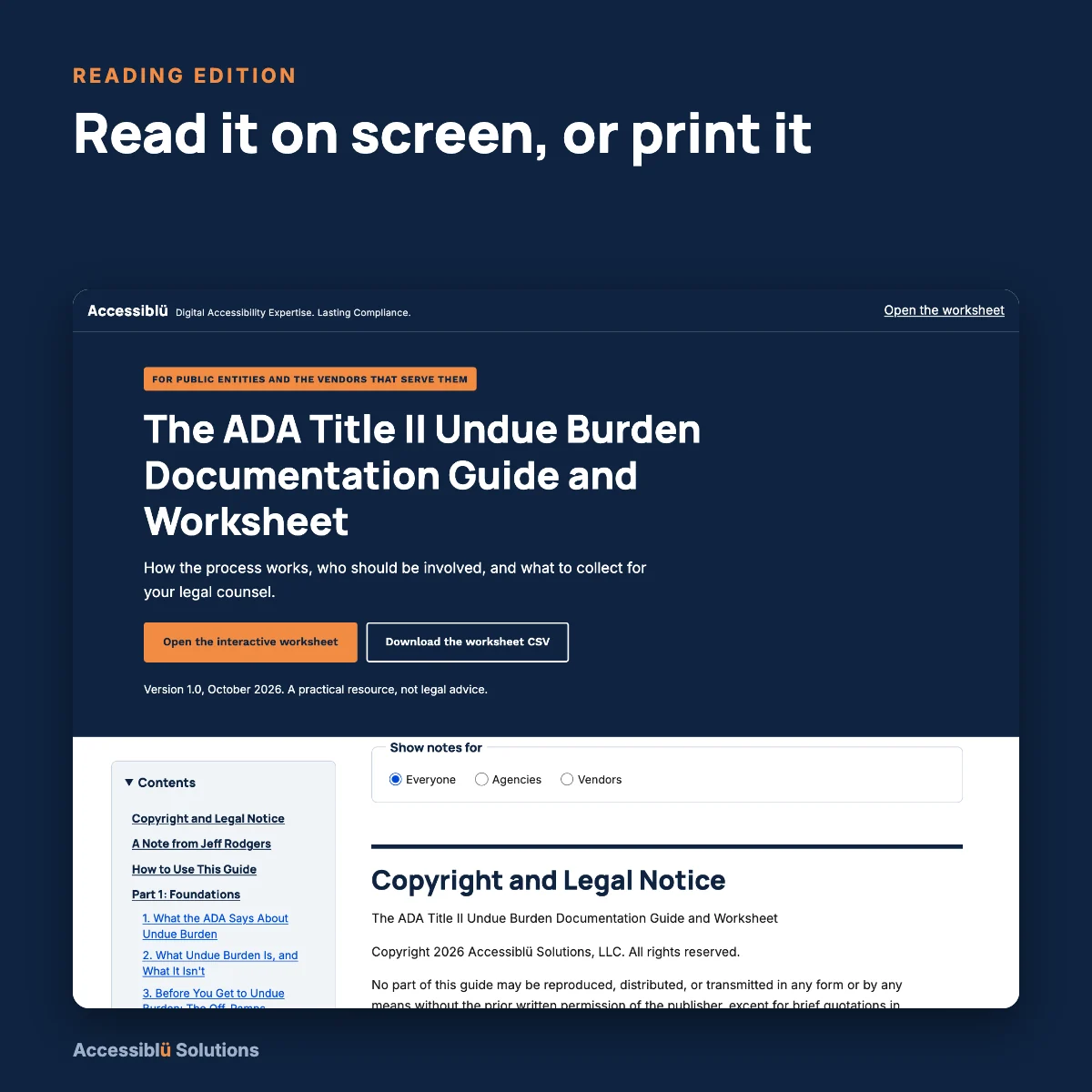
The guide arrives as a web edition to read on screen (it works offline), a PDF to print, and an editable Word file. The worksheet arrives as an interactive web tool with filters, progress counts and a printable view, and as a CSV that opens in Excel or Google Sheets.
First edition, version 1.0, October 2026. A practical resource, not legal advice.
Common questions
Does this make the undue burden determination for us?
No. The worksheet is a tracking tool. It does not make or replace an undue burden or fundamental alteration determination, which is a legal decision for the public entity and its counsel.
Where does my worksheet data go?
Nowhere. Entries are saved only in your browser on your device and are never sent anywhere, so export a CSV often and before you clear browser data or change computers.
Can I use it for more than one matter?
Yes. Your licence covers your organization’s internal use, and the guide suggests keeping one copy of the worksheet per service and requirement so each record stays clean.