

The ADA Title II DOJ Rule Deadline Is Here: What Government Agencies Need to Do Now

Jeffrey Rodgers
April 06 14 min read Image Caption
We’re in April 2026, and the DOJ ADA Title II Rule deadline of April 24 is upon us. I’m still having conversations with state and local government agencies that are just hearing about this requirement for the first time.
If that’s you, don’t panic! We got you!
Government agencies have a lot on their plates. But here’s the reality: agencies serving populations of 50,000 or more must demonstrate they have processes in place to ensure their digital content is accessible to people with disabilities.
The good news? It’s not too late. The even better news? For smaller entities serving under 50,000 people, you have until April 26, 2027. But please don’t waste that extra year.
We’re Working With Agencies Across the Country Right Now
Over the past few months, Accessiblü has been working directly with state and local government agencies throughout the U.S. to help them prepare for the ADA Title II DOJ Rule deadline. From county websites in the Midwest to city portals on the West Coast, from state agency systems to regional authorities, we’ve been in the trenches helping public entities get their compliance processes established.
What we’re seeing is a pattern. Some agencies started early and are in good shape. Others waited, hoping for guidance or a deadline extension. And some are just now realizing this applies to them.
Here’s what I want you to understand: regardless of where you are right now, there’s a path forward. But the path is different depending on how much time you have.
Most of the government agencies we’re working with are getting their compliance processes established for less than $10,000 over six months. That’s significantly less than what traditional audit firms charge for a single comprehensive audit that just gives you a problem list without solutions.
If You Have Until 2027, Use That Time Wisely
For smaller agencies with the April 2027 deadline, you have a tremendous advantage right now. You have 12 additional months to watch what happens with larger entities, learn from their approaches, and build a solid compliance foundation without the panic.
But I’m going to be direct with you: don’t squander that time.
We’ve already seen agencies with the 2027 deadline assume they can ignore this until next spring. That’s a mistake for several reasons.
First, accessibility work takes time. Even with expert help, documenting your digital inventory, establishing processes, training staff, and remediating your priority content requires months, not weeks. If you wait until January 2027 to start, you’ll be in the same panicked position that some larger agencies are in right now.
Second, the legal landscape doesn’t pause. The ADA has always applied to government digital services. The DOJ rule simply clarifies the technical standards and timelines. Waiting until your deadline doesn’t protect you from complaints or lawsuits in the meantime.
Third, this is about serving your community. The people you serve who have disabilities need access to your services now, not in April 2027. Every month you delay is another month that residents can’t apply for permits online, pay bills through your website, or access public information independently.
Use your extra year to do this right. Start your planning now, build your processes methodically, train your staff properly, and arrive at April 2027 with a mature accessibility program instead of a last-minute scramble.
The Agencies Still Hoping for a Reprieve
I get calls from government leaders asking if there’s any chance the deadline will be extended or the rule will be modified. Sometimes there’s talk about potential regulatory changes with new administrations. Sometimes it’s just wishful thinking.
Let me address this directly: maybe something changes. Maybe the DOJ issues additional guidance. Maybe implementation timelines get adjusted. I don’t have a crystal ball.
But here’s what I know for certain: the fundamental requirement isn’t going away. Government agencies must provide equal access to their programs and services for people with disabilities. That’s been the law since the ADA was signed in 1990. The DOJ Title II Rule simply established clear technical standards (WCAG 2.1 Level AA) and specific deadlines for web and mobile accessibility.
Even if something changes with the rule itself, the underlying obligation remains. And frankly, waiting for a reprieve is the wrong approach to serving your community.
Think about what accessibility actually means. It means a veteran with a traumatic brain injury can access your county’s veteran services information. It means a small business owner who is blind can renew their business license through your city portal. It means a parent who is deaf can register their child for summer recreation programs. It means an elderly resident with limited mobility can pay their water bill online instead of having to visit city hall in person.
This isn’t just about compliance. This is about making sure everyone in your community can access the government services they need and have a right to access.
What the DOJ Title II Rule Actually Requires
Let me cut through the confusion and tell you what you actually need to have in place by the deadline.
The rule requires that your web content and mobile apps conform to WCAG 2.1 Level AA standards. But more importantly, it requires that you have operational processes established to maintain accessibility and respond to issues.
Specifically, you need three things:
A process for handling accessibility complaints and accommodation requests. This means documented procedures for what happens when someone reports that they can’t access your digital content. Who receives the complaint? How quickly do you respond? What steps do you take to provide an alternative? Who’s responsible for fixing the underlying issue?
A transition plan for bringing existing digital content into compliance. You don’t need every single digital asset fixed by the deadline, but you need a documented plan for how you’ll address accessibility barriers over time. This includes an inventory of your digital properties, a prioritization framework, timelines, responsible parties, and methods for tracking progress.
Your most widely used digital content must be accessible. Your main website, frequently used forms, online payment systems, public records that get regular requests, these need to meet WCAG 2.1 Level AA standards. The DOJ recognizes you can’t fix everything instantly, but the things people actually use need to work for everyone.
Notice what’s not on this list: having every PDF ever created be perfectly accessible, having zero accessibility errors across your entire web presence, or having completed a comprehensive audit by a major consulting firm.
The DOJ Title II Rule is about operational readiness and demonstrated commitment to accessibility, not about achieving perfect technical compliance across everything by a specific date.
It’s Not Too Late (But You Need to Move Fast)
If you’re reading this in April 2026 and haven’t started, here’s the truth: you can still get to a defensible compliance position. It’s tight, but it’s possible.
Here’s what you need to do immediately:
Document your process right now. Even if it’s basic, write down how your organization will handle accessibility complaints. Assign responsibility to specific positions. Set response timeframes. Establish escalation procedures. This gives you the foundational requirement the DOJ Title II Rule mandates.
Identify your 10-15 most critical digital assets. Your main website, your top online services, your most-used forms. Get these evaluated by someone who actually understands accessibility testing. Not automated scanning, real expert evaluation.
Create a basic transition plan. List your digital properties, categorize them by priority, and set realistic timelines for addressing barriers. The plan doesn’t have to be fancy, but it needs to show you’ve thought through the scope and you’re approaching this systematically.
Get help from people who know what they’re doing. This is where working with accessibility experts provides real value. We can help you focus on what actually matters, avoid expensive mistakes, and establish processes that work for your organization.
Stop creating new accessibility barriers. Train your web team on basic accessibility principles. Set up simple testing procedures for new content. The worst thing you can do is fix old issues while simultaneously creating new ones.
Why Accessiblü Is Different (And Why That Matters Now)
Most accessibility companies want to sell you a comprehensive audit for $30,000-$50,000, deliver a 200-page report listing everything that’s broken, and then offer to test you again in six months. That model doesn’t work when you’re up against a deadline and have limited budget.
Accessiblü provides managed accessibility operations with a direct-to-expert model. Here’s what that means in practical terms:
We test and fix simultaneously. Instead of spending weeks creating a problem list, we identify issues and start solving them immediately. This is the agile approach to accessibility, and it’s what government agencies need right now.
You work directly with accessibility experts, not account managers or project coordinators. When you have a question, you’re talking to someone who understands WCAG standards, knows assistive technology, and can actually remediate the barriers we find.
We help you build processes that scale. Our goal isn’t to make you dependent on us for every accessibility decision. We help you establish internal workflows, train your staff, and develop the capability to maintain accessibility ongoing.
We focus on solutions, not just compliance. Yes, you need to meet the DOJ Title II Rule requirements. But our approach is about building a sustainable accessibility practice that serves your community, not just checking regulatory boxes.
Think of accessibility the way you think about cybersecurity. You don’t do one big security audit, fix everything, and declare yourself secure forever. You have ongoing monitoring, rapid response to issues, regular updates, and expert support for day-to-day security operations. Accessibility works the same way.
The majority of our government clients are establishing their compliance processes for under $10,000 over six months. That includes expert guidance, process development, priority content remediation, and staff training. Compare that to what audit firms charge just to tell you what’s wrong.
What We’re Helping Agencies Do Right Now
The agencies we’re working with are in different stages of readiness. Some started planning six months ago and are refining their processes. Others came to us in March in panic mode. Here’s how we’re helping both:
For agencies that started early: We’re conducting targeted testing of priority content, helping document their transition plans, training their staff on accessibility fundamentals, setting up sustainable workflows for ongoing compliance, and providing expert validation that their processes meet DOJ requirements.
For agencies that waited: We’re doing triage. We help them identify their absolute must-fix content, establish basic complaint handling processes immediately, create rapid-deployment transition plans, and provide direct remediation support for critical barriers. Then we work with them to build out more comprehensive processes over the following months.
For agencies with the 2027 deadline: We’re helping them take advantage of their extra time by building mature accessibility programs. This includes comprehensive digital inventories, staff training programs, procurement policy updates, vendor management frameworks, and testing protocols that prevent future issues.
The common thread is that we’re helping agencies focus on what actually matters instead of getting overwhelmed by the enormity of perfect compliance.
Real Talk About What Happens After April 24
Let’s address what a lot of agencies are quietly worried about: what happens if we’re not fully compliant by the deadline?
The DOJ isn’t going to swoop in on April 25 and start fining every government agency that has accessibility issues. That’s not how this works.
What the DOJ is looking for is good-faith effort and operational readiness. Can you demonstrate that you have processes in place? Do you have a documented plan? Are you actively working to address barriers? Are you responding appropriately to accessibility complaints?
If the answer to those questions is yes, you’re in a defensible position even if you still have work to do on remediation.
If the answer is no, that you’ve ignored this completely and have nothing in place, then yes, you’re vulnerable. Not just to DOJ enforcement, but to lawsuits from advocacy groups and individuals who are being denied access to government services.
The agencies that will face the most risk are the ones who either did nothing at all, or who can’t demonstrate a coherent approach to accessibility. Having a plan that you’re actively executing counts for a lot more than having perfect technical compliance across everything.
The Investment That Pays Off
Government budgets are tight. Every agency I talk to has limited resources and competing priorities. Accessibility often gets framed as an expense rather than an investment.
But here’s the reality: making your digital services accessible expands access to your entire community. It reduces the burden on your staff who currently handle phone calls and in-person requests because your online services don’t work for everyone. It minimizes your legal risk. And it demonstrates that your agency takes seriously its obligation to serve all residents.
The cost of working with accessibility experts now is a fraction of what you’ll spend defending lawsuits later or scrambling to respond to DOJ enforcement actions.
More importantly, working with the right accessibility partner actually saves you money. We help agencies avoid expensive mistakes like mass PDF remediation projects that provide little value. We prevent them from buying automated tools that promise compliance but deliver mostly false positives. We keep them from hiring audit firms that produce giant problem lists but no solutions.
Our managed operations model means you get expert accessibility support without the overhead of hiring full-time specialists. For most government agencies, that’s the right fit. You need consistent expertise, but probably don’t have enough volume to justify dedicated accessibility staff positions.
When we tell agencies they can establish their compliance processes for under $10,000 over six months, they’re often surprised. They’ve been talking to firms quoting $40,000 or $50,000 for audits alone. Our approach costs less because we’re not selling you a document or software. We’re helping you build capability while simultaneously addressing your most critical barriers.
What We Need From You
If you’re a government agency facing the April 2026 deadline and you need help, here’s what we need from you:
Commitment to take action. We can help you establish processes, prioritize work, and get compliant. But we need you to actually implement what we recommend. Accessibility consulting doesn’t work if the recommendations sit in a drawer.
Access to your web team. We’ll work directly with your developers, content creators, and IT staff. Accessibility isn’t something we can do completely separate from your team. We need collaboration.
Realistic expectations. We can get you to operational readiness quickly. We can establish defensible processes and address your most critical barriers. We can’t fix everything overnight, and neither can anyone else. But we can get you to a position where you can demonstrate good-faith compliance effort.
Willingness to prioritize. Not everything is equally important. We’ll help you figure out what to focus on first, but you need to be willing to make strategic decisions about where to invest your limited time and resources.
If you have the 2027 deadline, we need you to start now instead of waiting until next year. Use your advantage wisely.
The Bottom Line
The ADA Title II DOJ Rule deadline is April 24, 2026 for larger agencies and April 26, 2027 for smaller ones. Whether you’re facing an immediate deadline or have another year, the requirement is the same: government digital services must be accessible to people with disabilities.
This is about more than compliance. This is about ensuring everyone in your community can access the government services they need.
Accessiblü is working with state and local government agencies across the country right now to help them meet these requirements. We provide managed accessibility operations with direct expert support, focusing on solutions instead of just identifying problems. Most of our government clients are doing this for less than $10,000 over six months.
If you’re facing the April deadline and need help establishing your processes, identifying your priorities, and getting to operational readiness, reach out to us. We can help you get there.
If you have until 2027, don’t waste that extra time. Start building your accessibility program now so you arrive at your deadline with mature processes and demonstrated commitment instead of last-minute panic.
Either way, the time to act is now. The people in your community who rely on accessible digital services can’t wait, and neither should you.
 September 03 11 min read
The idea for these two books didn’t come from a whiteboard session. It came from hearing the same question over…...
 June 02 9 min read
Most colleges, county governments, and state agencies breathed a sigh of relief when the DOJ extended the ADA Title…...
April 20 9 min read
If you’ve been scrambling to meet the April 24, 2026, ADA Title II compliance deadline for web and mobile app…...
February 17 12 min read
Over the past two months, I’ve had dozens of conversations with state agencies, county governments, and public entities who are…...
 February 04 11 min read
I think it’s about time that someone writes this blog. As an accessibility company, you may think we benefit from…...
 November 25 11 min read
If you thought navigating ADA website compliance was challenging before, there’s a new wrinkle that’s making things even more complicated.…...
October 28 9 min read
Hi there — if you’re reading this, chances are you’re a C-Suite leader or a web/digital manager who cares about…...
September 15 11 min read
With just 7 months until April 2026, it’s time for an honest assessment—and smarter decisions about your path forward. As…...
 July 22 11 min read
When compliance costs meet fiscal reality: Navigating the undue burden provision with confidence and clarity Disclaimer: This article provides general…...
May 20 8 min read
In 2025, accessibility isn’t just a moral imperative—it’s a legal necessity. As businesses expand their online presence, the risk of…...
 April 28 12 min read
In today’s digital landscape, accessibility isn’t just a nice-to-have—it’s increasingly becoming a business imperative. If you’re a CEO, CTO, or…...
March 04 20 min read
This is a challenging time for public entities. The Department of Justice’s new rule under Title II of the ADA…...
February 11 8 min read
ADA Title II: Understanding the New DOJ Rule: What State & Local Leaders and Businesses Need to Know What the…...
 February 06 5 min read
Compliance, Deadlines, and What Businesses Need to Do Now The European Accessibility Act (EAA) is a game-changer for businesses operating…...
January 27 6 min read
We at Accessiblü strive to keep our political views private. However, I did feel the need to address the elephant…...
 September 19 11 min read
Digital accessibility is a complex challenge. Businesses often struggle to know where to start, lacking a clear understanding of how…...
September 05 8 min read
Digital accessibility presents a significant challenge for company executives. Many leaders mistakenly view it as a simple fix or an…...
April 10 10 min read
In a significant move towards inclusivity, the Department of Justice (DOJ) recently issued a final rule under Title II of…...
 December 01 10 min read
In today’s digital landscape, web accessibility is essential to ensuring equal access and inclusion for all users. Accessibility overlays have…...
 July 19 6 min read
The digital landscape is constantly evolving, and with it comes the need for inclusive and accessible online experiences. California has…...
 July 13 5 min read
If you own or operate a website used by the US federal government, you need to ensure it’s accessible to…...
 May 25 10 min read
On May 19, 2023, the Department of Education (DOE) and the Department of Justice (DOJ) issued a “Dear Colleague Letter”…...
 April 14 11 min read
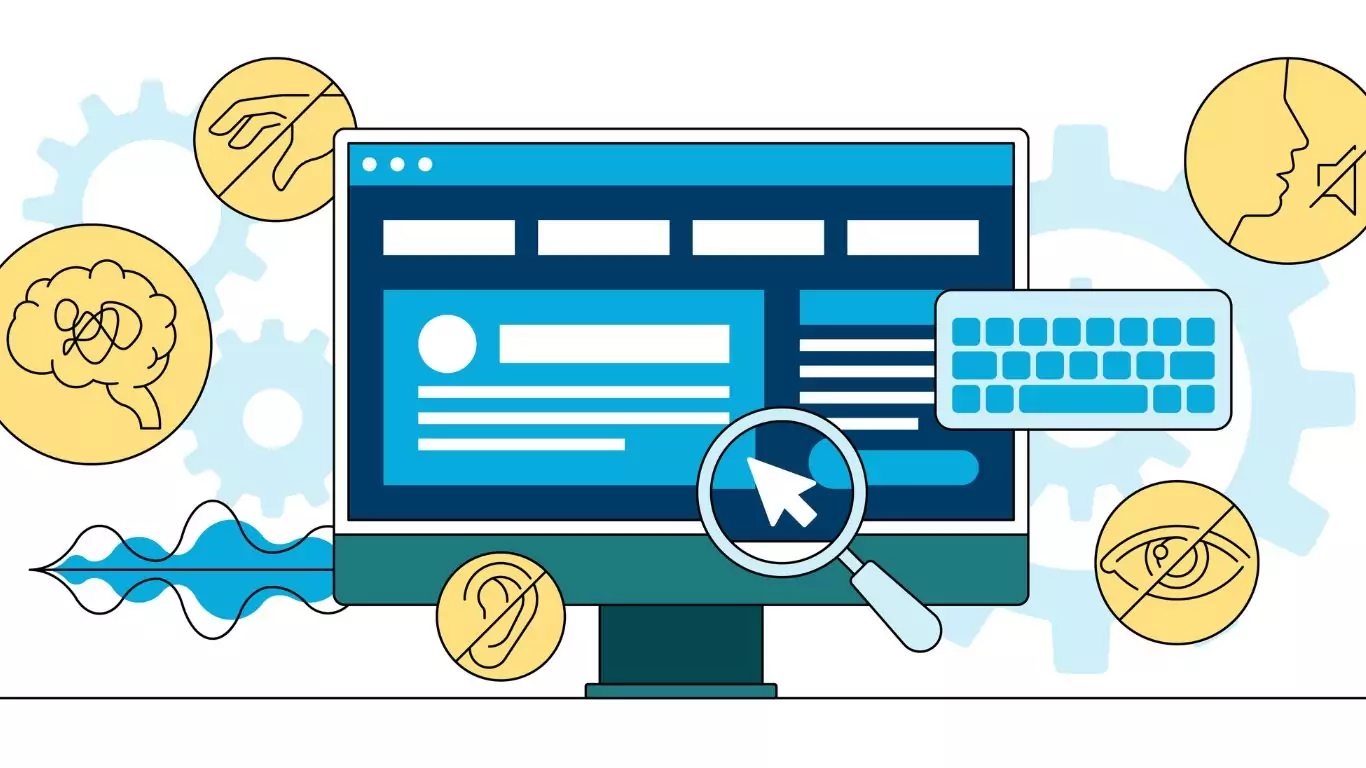
Mention “accessibility” in any conversation about websites or digital media; you might get a wide array of responses. Depending on…...
 August 19 9 min read
Digital Overlays are not accessible, and are not ADA compliant. Good web design from the beginning or an accessibility audit…...
 August 12 9 min read
Digital Overlays are not accessible, and are not ADA compliant. Good web design from the beginning or an accessibility audit…...
 May 16 5 min read
Global Accessibility Awareness Day (GAAD) is every third Thursday in May – this year it is May 19, 2022 On…...
 December 06 5 min read
We hear this question from businesses of all sizes, and often wonder why they ask, because the law is so…...