

The Future of Web Accessibility Under a Trump Administration

Jeffrey Rodgers
January 27 6 min read Image Caption
We at Accessiblü strive to keep our political views private. However, I did feel the need to address the elephant in the accessibility room. Now that we are under another Trump administration, what does that mean for web accessibility and accessibility in general?
With that in mind, here are some facts – and I do mean facts – that we should all know about regarding the future of web accessibility under the new Trump administration.
Trump, WCAG, and the ADA
When discussing Trump, Accessibility, ADA, and WCAG, it’s easy to get lost in the political shuffle. However, the reality is that digital accessibility extends far beyond any single administration. While political climates influence enforcement priorities and regulatory guidance, the core civil rights protections that underpin accessibility—particularly in the United States—remain intact. In this blog post, I will explore what the future of web accessibility may look like under another Trump administration, focusing on existing federal laws, the continued rise of lawsuits, and the fact that digital accessibility remains a crucial priority for private entities.
Trump’s Influence on Accessibility Laws: Limited by Design
One of the most important facts to keep in mind is that President Trump cannot simply repeal federal laws—including the Americans with Disabilities Act (ADA)—with an executive order. Repealing an act of Congress requires, well, an act of Congress. That means:
•About a Dozen Federal Accessibility-Related Laws Remain in Force. Besides the ADA, we also have the CVAA (21st Century Communications and Video Accessibility Act), IDEA (Individuals with Disabilities Education Act), Air Carrier Access Act, Fair Housing Act, Fair Credit Reporting Act, and more.
•Civil Rights Laws Are Enforceable by Private Citizens. Even if an administration deprioritizes or slows federal enforcement, private lawsuits remain a powerful mechanism.
This is why political posturing, while it affects the day-to-day administration of laws, does not remove the underlying rights or obligations.
FACT: The Web Content Accessibility Guidelines (WCAG), is set by the World Wide Web Consortium (W3C), an international organization. The WCAG is not controlled by any one government or person.
DOJ Title II Ruling: Still in Effect
Last year, the Department of Justice (DOJ) released its long-awaited rules clarifying Title II requirements of the ADA, which apply to state and local government entities. Those rules are still in effect—regardless of which party is in the White House. They offer clearer guidelines and help set standards for website and digital content compliance.
While a new administration might shift priorities or enforcement patterns, it cannot make the published regulation disappear overnight. Courts typically uphold these clarifications, and public entities must continue to comply.
Link to ADA.gov ADA Title II fact sheet.
Previous Term Trends: Lawsuits on the Rise
During Trump’s first term, we saw a surge in ADA-related lawsuits, especially around digital accessibility for retail and eCommerce websites. In fact, many have argued that because the federal government took a less active role in enforcement, private lawsuits became the primary driver of compliance. Here’s why that trend may continue:
1.Executive Branch Influence Is Limited. Even if the administration deprioritizes accessibility enforcement, private citizens and advocacy groups can still file lawsuits.
2.Growing Recognition of Digital Rights. Courts increasingly view websites and mobile apps as places of public accommodation under ADA Title III, which keeps the door open for litigation.
3.Shifts in Venue. When federal courts or certain jurisdictions appear less friendly to these lawsuits, “ADA trolls” often shift to state courts—particularly in California, Colorado, and New York, where additional legal protections for digital accessibility exist.
The Role of Accessibility in DEI Initiatives
We’ve all been reading about how the Trump administration is dismantling programs related to Diversity, Equity, and Inclusion (DEI). Accessibility, being an integral part of DEI efforts, can sometimes be affected by overall political climates. However, the ADA and other civil rights laws:
•Are strongly supported by decades of legal precedent.
•Have broad bipartisan backing in many aspects.
•Cannot be canceled by an executive order or administration-level preference.
So while agency-led DEI programs might receive fewer resources or face scrutiny, the fundamental laws protecting people with disabilities—and the private right to sue to enforce them—persist.
State & Private Sector Momentum
If there’s any slow-down in federal oversight, we are likely to see an increase in:
•State Legislation & Lawsuits. California has the Unruh Civil Rights Act, New York has its own accessibility-related legal precedents, and many states like Colorado, are pushing stronger digital accessibility requirements.
•Private Sector Demand. Companies recognize that accessibility is both a legal requirement and good for business. Accessible websites reach broader audiences and improve user satisfaction.
In other words, even if the federal government takes a back seat, private and state-level forces continue driving forward momentum on WCAG (Web Content Accessibility Guidelines) compliance and best practices.
Your Best Defense: An Accessible Website
If your company is considering relaxing its web accessibility efforts due to assumptions about potential changes under another Trump administration, that would be a big mistake. Lawsuits—state, federal, or private—will persist. The single best defense is simple:
Have an accessible site and digital properties that meet recognized standards such as WCAG.
That’s where our team at Accessiblü can help. We specialize in ensuring your digital presence meets and maintains crucial accessibility standards. We invite you to reach out for a free consultation and learn how we can support your compliance efforts.
Accessiblü blog: Navigating the Complex Landscape of Digital Accessibility
Conclusion
While there is a certain political angle to accessibility, the key message is clear: Trump cannot overturn existing ADA protections or repeal accessibility laws through executive orders alone. With the DOJ’s Title II rule still in effect, the ongoing rise in private lawsuits, and state-level regulations providing additional layers of enforcement, web accessibility remains a critical issue for any business or public entity that wants to avoid costly litigation and serve all users effectively.
No matter who occupies the White House, accessibility is here to stay. If anything, historical data shows that lawsuits can increase when federal enforcement is dialed down. So, rather than relaxing your efforts, proactively protect your organization—and respect the civil rights of people with disabilities—by making your digital properties compliant and inclusive.
Need help ensuring your website or mobile app is accessible?
Visit Accessiblü or contact us for a free consultation today. Let’s work together to build a more inclusive digital world—regardless of political shifts or changes in administration.
You can also download our free eBooks, guides, and digital accessibility checklist.
 September 03 11 min read
The idea for these two books didn’t come from a whiteboard session. It came from hearing the same question over…...
 June 02 9 min read
Most colleges, county governments, and state agencies breathed a sigh of relief when the DOJ extended the ADA Title…...
April 20 9 min read
If you’ve been scrambling to meet the April 24, 2026, ADA Title II compliance deadline for web and mobile app…...
April 06 14 min read
We’re in April 2026, and the DOJ ADA Title II Rule deadline of April 24 is upon us. I’m still…...
February 17 12 min read
Over the past two months, I’ve had dozens of conversations with state agencies, county governments, and public entities who are…...
 February 04 11 min read
I think it’s about time that someone writes this blog. As an accessibility company, you may think we benefit from…...
 November 25 11 min read
If you thought navigating ADA website compliance was challenging before, there’s a new wrinkle that’s making things even more complicated.…...
October 28 9 min read
Hi there — if you’re reading this, chances are you’re a C-Suite leader or a web/digital manager who cares about…...
September 15 11 min read
With just 7 months until April 2026, it’s time for an honest assessment—and smarter decisions about your path forward. As…...
 July 22 11 min read
When compliance costs meet fiscal reality: Navigating the undue burden provision with confidence and clarity Disclaimer: This article provides general…...
May 20 8 min read
In 2025, accessibility isn’t just a moral imperative—it’s a legal necessity. As businesses expand their online presence, the risk of…...
 April 28 12 min read
In today’s digital landscape, accessibility isn’t just a nice-to-have—it’s increasingly becoming a business imperative. If you’re a CEO, CTO, or…...
March 04 20 min read
This is a challenging time for public entities. The Department of Justice’s new rule under Title II of the ADA…...
February 11 8 min read
ADA Title II: Understanding the New DOJ Rule: What State & Local Leaders and Businesses Need to Know What the…...
 February 06 5 min read
Compliance, Deadlines, and What Businesses Need to Do Now The European Accessibility Act (EAA) is a game-changer for businesses operating…...
 September 19 11 min read
Digital accessibility is a complex challenge. Businesses often struggle to know where to start, lacking a clear understanding of how…...
September 05 8 min read
Digital accessibility presents a significant challenge for company executives. Many leaders mistakenly view it as a simple fix or an…...
April 10 10 min read
In a significant move towards inclusivity, the Department of Justice (DOJ) recently issued a final rule under Title II of…...
 December 01 10 min read
In today’s digital landscape, web accessibility is essential to ensuring equal access and inclusion for all users. Accessibility overlays have…...
 July 19 6 min read
The digital landscape is constantly evolving, and with it comes the need for inclusive and accessible online experiences. California has…...
 July 13 5 min read
If you own or operate a website used by the US federal government, you need to ensure it’s accessible to…...
 May 25 10 min read
On May 19, 2023, the Department of Education (DOE) and the Department of Justice (DOJ) issued a “Dear Colleague Letter”…...
 April 14 11 min read
Mention “accessibility” in any conversation about websites or digital media; you might get a wide array of responses. Depending on…...
 August 19 9 min read
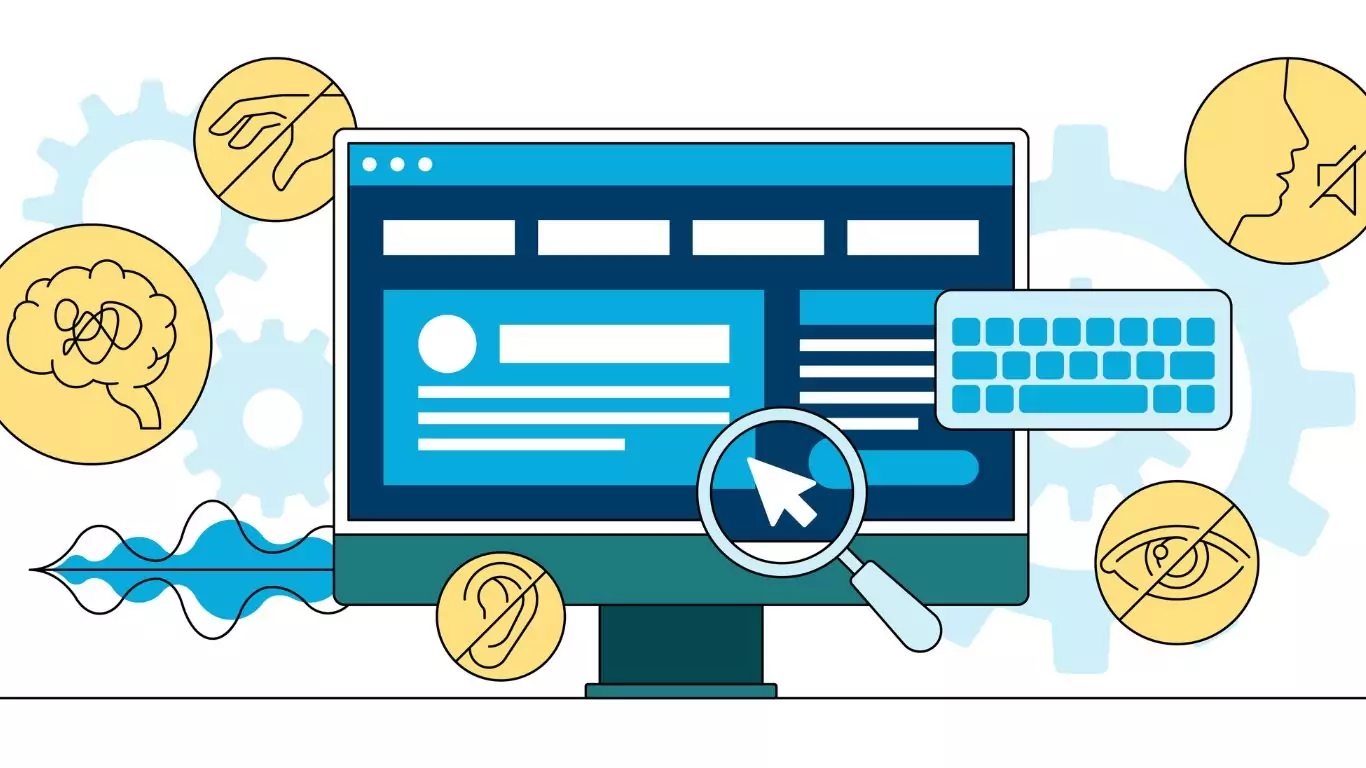
Digital Overlays are not accessible, and are not ADA compliant. Good web design from the beginning or an accessibility audit…...
 August 12 9 min read
Digital Overlays are not accessible, and are not ADA compliant. Good web design from the beginning or an accessibility audit…...
 May 16 5 min read
Global Accessibility Awareness Day (GAAD) is every third Thursday in May – this year it is May 19, 2022 On…...
 December 06 5 min read
We hear this question from businesses of all sizes, and often wonder why they ask, because the law is so…...