

The Dangers of Accessibility Overlays: Separating Fact from Fiction

Jeffrey Rodgers
December 01 10 min read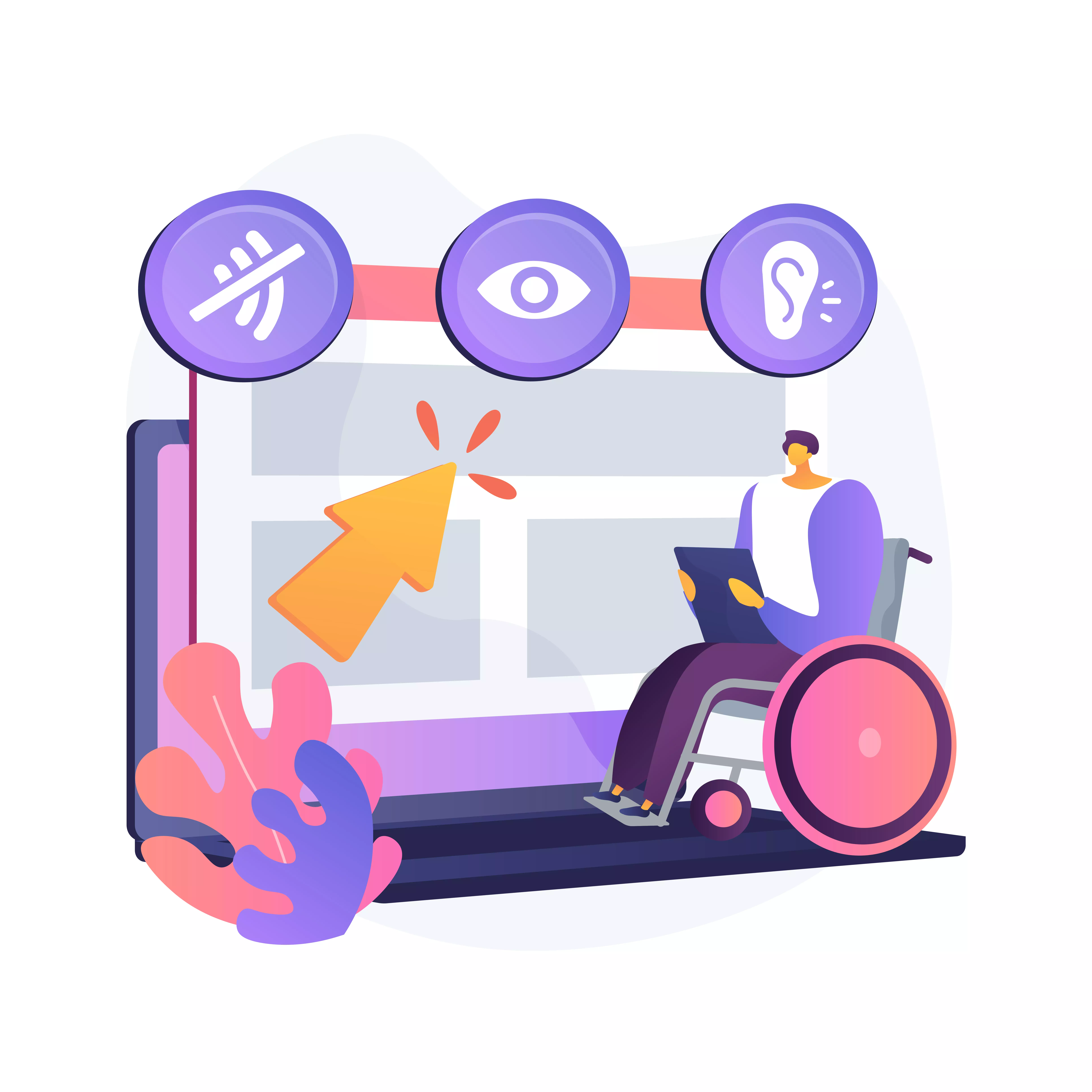 Image Caption
In today’s digital landscape, web accessibility is essential to ensuring equal access and inclusion for all users. Accessibility overlays have become a quick and seemingly easy solution to make websites accessible. However, it is important to understand the hidden dangers and limitations of relying solely on accessibility overlays.
Web accessibility refers to designing and developing websites that people with disabilities can use. It involves making sure that all users, regardless of their abilities, can navigate, interact with, and understand the content and functionality of a website. Accessibility overlays, however, are automated tools or plugins that claim to make websites accessible by adding or modifying elements on the page.
The importance of web accessibility
Before delving into the limitations and risks of accessibility overlays, it is crucial to recognize the significance of web accessibility. Accessible websites are legally required in many countries and provide a better user experience for all visitors. By making websites accessible, businesses can reach a wider audience, improve search engine optimization, and enhance their brand reputation.
Web Content Accessibility Guidelines (WCAG), Section 508 of the Rehabilitation Act, and the Americans with Disabilities Act (ADA) are some of the key standards and regulations that define the requirements for web accessibility. These guidelines cover various aspects of web design and development, such as providing alternative text for images, ensuring keyboard accessibility, and offering clear and concise content.
Accessibility is about the human condition and requires a human solution.
Common misconceptions about accessibility overlays
One of the common misconceptions about accessibility overlays is that they provide a one-size-fits-all solution for web accessibility. However, the reality is far from it. Accessibility overlays often rely on automated algorithms that attempt to fix accessibility issues without considering the unique context of each website. This can lead to ineffective or even harmful modifications, making it difficult for users with disabilities to navigate and understand the content.
Another misconception is that accessibility overlays can substitute manual testing and accessibility audits. While these tools may provide some automated checks, they cannot replace the expertise of accessibility professionals who thoroughly evaluate websites for compliance with accessibility standards. Automated tools may miss certain accessibility issues, resulting in a false sense of compliance.
The limitations of accessibility overlays
Accessibility overlays have several limitations that hinder their effectiveness in achieving true web accessibility. First, overlays often focus on superficial modifications, such as changing colors or altering text size. All things a user can already control in a web browser or on their device.
Overlays fail to address the underlying structural issues of a website. This can lead to a disjointed and confusing user experience for individuals who rely on assistive technologies like screen readers.
Moreover, accessibility overlays may introduce new barriers or fail to address existing ones. For instance, an overlay may add alternative text to images, but the descriptions generated by automated tools never match the context and purpose the images are used in.
Additionally, overlays may not account for dynamic content, interactive elements, or complex web applications, making them ineffective in providing a fully accessible experience.
The risks of relying solely on accessibility overlays
Relying solely on accessibility overlays poses significant risks for website owners and users. One of the main concerns is the legal implications. While accessibility overlays may claim to make a website compliant with accessibility standards, they often fall short of meeting the requirements outlined in WCAG, Section 508, or other laws. This leaves businesses vulnerable to lawsuits and legal consequences for non-compliance.
Another risk is the potential negative impact on users with disabilities. Accessibility overlays can create confusion, break the functionality of assistive technologies, and impede users’ ability to navigate and interact with a website.
This can lead to frustration, exclusion, and a poor user experience. It is important to prioritize true accessibility over quick fixes to ensure all users can fully engage with and benefit from a website.
The role of WCAG, 508, and ADA in web accessibility
To ensure web accessibility, it is crucial to understand the standards and regulations that govern it. WCAG, developed by the World Wide Web Consortium (W3C), is the globally recognized set of guidelines for making websites accessible. It provides specific success criteria and techniques for addressing various accessibility issues.
Section 508 of the Rehabilitation Act applies to federal agencies and organizations that receive federal funding. These entities must make their electronic and information technology accessible to people with disabilities. Compliance with Section 508 is often a prerequisite for doing business with the government.
The ADA is a landmark civil rights law in the United States that prohibits discrimination against individuals with disabilities. It applies to both the physical and digital realms, meaning that websites and online services must be accessible to people with disabilities. The ADA does not explicitly mention web accessibility, but courts have interpreted it as requiring accessible websites.
In 2023, the U.S. Department of Justice (DOJ) publicly stated that in order to comply with the ADA, websites should conform to WCAG 2.1 AA standards.
Learn More: Accessiblü Insight on WCAG and ADA Laws in the U.S.
The benefits of a comprehensive accessibility strategy
While accessibility overlays may seem like a convenient solution, they cannot replace a comprehensive accessibility strategy. A holistic approach to web accessibility involves integrating accessibility into the entire design and development process. This includes considering accessibility from the initial planning stages, conducting manual testing and accessibility audits, and involving experts who have a deep understanding of accessibility guidelines and best practices.
Implementing a comprehensive accessibility strategy brings numerous benefits. It ensures that websites are accessible to all users, regardless of their abilities or disabilities. It reduces the risk of legal consequences and protects businesses from potential lawsuits. Additionally, it enhances the overall user experience, improves search engine rankings, and demonstrates a commitment to inclusivity and social responsibility.
The drawbacks of using automated tools for accessibility
Automated tools, including accessibility overlays, can be useful for identifying certain accessibility issues. However, they have significant drawbacks that limit their effectiveness. Automated tools often produce false positives or false negatives, flagging non-issues or missing critical accessibility barriers. They lack the contextual understanding and human judgment necessary to accurately assess the accessibility of a website.
Furthermore, automated tools cannot fully evaluate subjective aspects of accessibility, such as the clarity and readability of content or the logical flow of information. These tools may also generate reports that are difficult to interpret or prioritize, making it challenging for website owners or developers to address the identified issues effectively. Manual testing and accessibility audits conducted by professionals are essential for a thorough and accurate evaluation.
The importance of manual testing and accessibility audits
Manual testing and accessibility audits are critical components of a comprehensive accessibility strategy. While automated tools can provide some insights, they cannot replace the expertise and nuanced understanding of accessibility professionals. Manual testing involves using assistive technologies, such as screen readers or keyboard navigation, to interact with a website and identify accessibility barriers.
Accessibility audits, on the other hand, involve a systematic evaluation of a website’s compliance with accessibility standards and guidelines. Accessibility professionals review the website’s code, design, and content, identifying issues and providing recommendations for improvement. These audits go beyond automated checks and provide a detailed analysis tailored to the specific needs and requirements of a website.
Creating accessible websites: Best practices and guidelines
To create truly accessible websites, it is important to follow best practices and guidelines established by WCAG. Some key considerations include:
- Providing alternative text for images: Descriptive alternative text ensures that users with visual impairments can understand the content conveyed by images.
- Ensuring keyboard accessibility: Websites should be fully accessible using only a keyboard, without requiring a mouse or other pointing device.
- Using headings and semantic markup: Properly structured HTML, including headings and semantic elements, improves navigation and comprehension for all users, including those using assistive technologies.
- Offering clear and concise content: Using plain language, organizing content logically, and avoiding jargon or complex language helps users with cognitive or learning disabilities understand the information.
- Testing with assistive technologies: Regularly testing websites with screen readers, voice recognition software, or other assistive technologies helps identify and address accessibility barriers.
Learn More: Accessiblü Insight About How Disabled Users Navigate the Web.
The impact of accessibility overlays on screen readers
Screen readers are assistive technologies used by individuals with visual impairments to access and navigate websites. Accessibility overlays can significantly impact the experience of screen reader users. Overlays often modify the structure and functionality of a website, making it difficult or impossible for screen readers to interpret the content correctly.
For example, an overlay may add hidden elements or alter the order of content, breaking the logical flow and navigation of a web page. This can result in screen readers reading out-of-order or irrelevant information, causing confusion and frustration for users. To ensure a seamless experience for screen reader users, it is crucial to prioritize manual testing and follow established accessibility guidelines.
Navigating the legal landscape: ADA lawsuits and accessibility overlays
In recent years, there has been a significant increase in lawsuits related to web accessibility and ADA compliance. Businesses and organizations that do not prioritize accessibility may face legal consequences, including costly settlements, legal fees, and damage to their reputation.
Accessibility overlays, despite their claims of making websites accessible, often fail to meet the requirements outlined in WCAG, Section 508, and ADA. Don’t fall for their marketing promises of covering your legal fees or guaranteeing you won’t get sued. Their fine print says otherwise!
It is important for website owners and developers to be proactive in understanding and complying with accessibility standards. Instead of relying on quick fixes like accessibility overlays, investing in a comprehensive accessibility strategy and working with accessibility professionals can help mitigate the risk of legal action and ensure true web accessibility.
Choosing the right approach for web accessibility
When it comes to web accessibility, it is crucial to choose the right approach that prioritizes true accessibility over quick fixes. Accessibility overlays may seem like an appealing solution due to their ease of implementation, but their limitations and risks outweigh their benefits. To create accessible websites, businesses should focus on:
- Implementing a comprehensive accessibility strategy that includes manual testing, accessibility audits, and adherence to established guidelines.
- Engaging accessibility professionals who have expertise in web accessibility and can provide accurate and tailored recommendations.
- Regularly reviewing and updating websites to ensure ongoing compliance with accessibility standards and guidelines.
By prioritizing true accessibility, businesses can create inclusive online experiences that benefit all users and avoid the legal and reputational risks associated with non-compliance.
Learn More: Accessiblü Insight on Designing Inclusive Websites.
Conclusion: Prioritizing true accessibility over quick fixes
In conclusion, accessibility overlays may appear to offer a quick and easy solution for web accessibility, but they come with hidden dangers and limitations. Relying solely on overlays can lead to ineffective modifications, legal risks, and exclusion of users with disabilities. True web accessibility requires a comprehensive approach that includes manual testing, accessibility audits, and adherence to established guidelines.
To ensure an accessible website, it is crucial to avoid overlays and have your website evaluated by accessibility professionals. Investing in true accessibility not only benefits individuals with disabilities but also enhances the overall user experience, expands your audience, and protects your business from legal consequences. Let’s prioritize true accessibility and create an inclusive digital world for everyone.
 September 03 11 min read
The idea for these two books didn’t come from a whiteboard session. It came from hearing the same question over…...
 June 02 9 min read
Most colleges, county governments, and state agencies breathed a sigh of relief when the DOJ extended the ADA Title…...
 April 20 9 min read
If you’ve been scrambling to meet the April 24, 2026, ADA Title II compliance deadline for web and mobile app…...
April 06 14 min read
We’re in April 2026, and the DOJ ADA Title II Rule deadline of April 24 is upon us. I’m still…...
February 17 12 min read
Over the past two months, I’ve had dozens of conversations with state agencies, county governments, and public entities who are…...
 February 04 11 min read
I think it’s about time that someone writes this blog. As an accessibility company, you may think we benefit from…...
 November 25 11 min read
If you thought navigating ADA website compliance was challenging before, there’s a new wrinkle that’s making things even more complicated.…...
October 28 9 min read
Hi there — if you’re reading this, chances are you’re a C-Suite leader or a web/digital manager who cares about…...
 October 22 10 min read
If you think accessibility compliance testing means running a quick automated scan and checking your site with one screen reader,…...
 October 03 12 min read
I got an email last week that made me both laugh and cringe at the same time. A procurement manager…...
September 15 11 min read
With just 7 months until April 2026, it’s time for an honest assessment—and smarter decisions about your path forward. As…...
 August 06 11 min read
How the traditional audit-first approach keeps businesses stuck in an expensive cycle of non-compliance—and what actually works instead. If you’re…...
July 31 9 min read
Why We Recommend Managed Accessibility Ops Over Traditional Audits When potential clients reach out to Accessiblü, most ask for the…...
 July 22 11 min read
When compliance costs meet fiscal reality: Navigating the undue burden provision with confidence and clarity Disclaimer: This article provides general…...
May 20 8 min read
In 2025, accessibility isn’t just a moral imperative—it’s a legal necessity. As businesses expand their online presence, the risk of…...
 April 28 12 min read
In today’s digital landscape, accessibility isn’t just a nice-to-have—it’s increasingly becoming a business imperative. If you’re a CEO, CTO, or…...
April 03 11 min read
In my years leading digital accessibility initiatives, I’ve witnessed a recurring pattern: organizations invest heavily in accessibility audits, only to…...
March 23 5 min read
In the digital age, where customer satisfaction and brand loyalty drive success, ensuring your digital assets are accessible is not…...
March 04 20 min read
This is a challenging time for public entities. The Department of Justice’s new rule under Title II of the ADA…...
February 11 8 min read
ADA Title II: Understanding the New DOJ Rule: What State & Local Leaders and Businesses Need to Know What the…...
 February 06 5 min read
Compliance, Deadlines, and What Businesses Need to Do Now The European Accessibility Act (EAA) is a game-changer for businesses operating…...
January 27 6 min read
We at Accessiblü strive to keep our political views private. However, I did feel the need to address the elephant…...
 September 23 7 min read
In today’s digital age, web accessibility has emerged as a crucial element for ensuring that individuals of all abilities can…...
 September 19 11 min read
Digital accessibility is a complex challenge. Businesses often struggle to know where to start, lacking a clear understanding of how…...
September 05 8 min read
Digital accessibility presents a significant challenge for company executives. Many leaders mistakenly view it as a simple fix or an…...
 August 28 9 min read
In today’s digital-first world, ensuring your website, desktop applications, and mobile apps are accessible is not just a matter of…...
 August 28 5 min read
Are you responsible for ensuring digital accessibility on your company’s website, app, or digital assets? Then you know that in…...
July 01 9 min read
Ensuring digital accessibility is a crucial responsibility, yet interpreting and addressing the findings from accessibility audits can pose significant challenges…...
 June 28 7 min read
In today’s interconnected world, mobile applications serve as gateways to information, services, and experiences for diverse audiences. However, ensuring these…...
April 10 10 min read
In a significant move towards inclusivity, the Department of Justice (DOJ) recently issued a final rule under Title II of…...
March 15 12 min read
Knowing what to ask for in an accessibility contract or Request For Proposal (RFP) will help ensure that you get…...
December 11 10 min read
As businesses increasingly recognize the importance of creating inclusive digital experiences, there is a growing demand for manual accessibility audits.…...
November 07 11 min read
When it comes to evaluating the accessibility of your website or app, understanding which type of audit report is best…...
 September 18 15 min read
Accessibility is a fundamental aspect that all website owners and developers should consider. Understanding how people with disabilities navigate the…...
 July 19 6 min read
The digital landscape is constantly evolving, and with it comes the need for inclusive and accessible online experiences. California has…...
 July 13 5 min read
If you own or operate a website used by the US federal government, you need to ensure it’s accessible to…...
 May 25 10 min read
On May 19, 2023, the Department of Education (DOE) and the Department of Justice (DOJ) issued a “Dear Colleague Letter”…...
 April 14 11 min read
Mention “accessibility” in any conversation about websites or digital media; you might get a wide array of responses. Depending on…...
 October 31 11 min read
Over the years of working with businesses on accessibility conformance, we’ve seen the same mistakes made over and over again.…...
 August 19 9 min read
Digital Overlays are not accessible, and are not ADA compliant. Good web design from the beginning or an accessibility audit…...
August 12 9 min read
Digital Overlays are not accessible, and are not ADA compliant. Good web design from the beginning or an accessibility audit…...
 May 16 5 min read
Global Accessibility Awareness Day (GAAD) is every third Thursday in May – this year it is May 19, 2022 On…...
 December 06 5 min read
We hear this question from businesses of all sizes, and often wonder why they ask, because the law is so…...
 October 15 5 min read
Website ADA audits are typically the initial offering from the accessibility industry; they promise to find all of the accessibility…...
October 08 5 min read
Note: this post does not constitute legal advice. You should consult an attorney regarding an ADA Lawsuit or if you’ve…...
 September 03 5 min read
TLDR: Ask your accountant about the Disabled Access Credit. You can claim 50% of what you spend on web accessibility…...