

The Accessibility Paralysis Series: Part 1 – Too Many Cooks in the Digital Kitchen

Jeffrey Rodgers
September 26 12 min read Image Caption
Part 1 of 4: Why Getting Everyone on the Same Page About Digital Accessibility Feels Like Herding Cats
Series Introduction: Over the years, I’ve watched dozens of organizations struggle with the same accessibility challenges that keep them stuck in planning mode instead of moving toward implementation. Through conversations with everyone from city councils to Fortune 500 companies, I’ve identified four major obstacles that create what I call “accessibility paralysis.” That’s why I’ve decided to compile a series of articles that explain each of these concepts in detail.
This four-part series explores these common traps:
- Part 1: The multi-stakeholder coordination nightmare that turns accessibility planning into endless meetings
- Part 2: The audit shopping confusion that makes it impossible to compare vendors
- Part 3: The urgency misconception that keeps accessibility stuck in “should do” territory
- Part 4: The budget anxiety created by unpredictable traditional accessibility models
Each challenge feeds into the others, creating a cycle that prevents organizations from achieving their accessibility goals. But here’s the good news: these patterns are predictable, which means they’re also solvable. Let’s start with the coordination challenge that trips up nearly every organization.
I had a call last week that perfectly captured something I see almost daily in my work with organizations trying to tackle digital accessibility. The prospect – let’s call him David – was a web manager at a mid-size healthcare organization. He’d been tasked with “figuring out this accessibility thing” six months ago, and he was calling because, in his words, “I feel like I’m stuck in corporate purgatory.”
As a former Marine, I’ve learned to appreciate when someone shows good initiative, even if the execution needs work. David definitely had initiative – he’d been researching vendors, attending webinars, and building internal awareness for months. But like a lot of well-intentioned folks I talk to, he was stuck in “accessibility paralysis!”
David’s story is one I hear variations of every week. He knows his organization needs to address digital accessibility compliance, but every time he tries to move forward, he runs into what I’ve come to think of as the Multi-Stakeholder Coordination Nightmare. Sound familiar?
The Cast of Characters (And Why They All Want Different Things)
Let me paint you a picture of what David was dealing with, because I bet it mirrors what’s happening in your organization right now.
Legal/Compliance Team: “We need to minimize lawsuit risk and ensure we’re meeting ADA requirements. What’s our liability exposure if we don’t act immediately? Can you guarantee compliance?”
IT Department: “How will this impact our current development cycle? Do we need new tools? Will this slow down our other projects? What’s the technical learning curve?”
UX/Design Team: “Will accessibility requirements compromise our brand aesthetics? How much will we need to redesign? Are we talking about major visual overhauls?”
Marketing Department: “When will the website need to come down for updates? How will this affect our campaigns? Will it impact our conversion rates? What about our social media?”
Procurement/Finance: “What’s this going to cost? Can we do it in phases? Do we need to put this out for RFP? What’s the ongoing budget impact?”
Executive Leadership: “Why is this taking so long to figure out? Can’t we just fix it? What’s the ROI? When will we be done?”
Each of these groups is asking perfectly reasonable questions from their perspective. The problem? They’re all optimizing for different outcomes, operating on different timelines, and speaking different languages.
The Accessibility Tower of Babel
Here’s what I’ve observed after working with dozens of organizations: accessibility projects fail more often due to internal coordination challenges than technical implementation problems. The technology part? That’s usually straightforward. Getting six departments to agree on priorities, timeline, and approach? That’s where things get messy.
I remember one Fortune 500 company where the accessibility initiative ping-ponged between departments for eight months. Legal wanted immediate action due to a compliance scare. IT wanted to wait until their next major site redesign. Marketing was concerned about brand consistency. UX wanted to research inclusive design principles. Finance wanted a detailed cost-benefit analysis.
Meanwhile, users with disabilities were struggling to complete basic tasks on their site every single day.
I’ve seen this same pattern play out with a major university, where the accessibility conversation bounced between academic affairs, IT services, legal counsel, and student services for an entire academic year. I’ve watched it happen with companies where sales, customer service, web development, and compliance all had different ideas about accessibility priorities. And I’ve sat through calls with municipal public works departments where accessibility became a jurisdictional football between different city agencies.
The Translation Problem
Part of what makes this so challenging is that each stakeholder group needs accessibility information translated into their domain language:
- Legal needs to understand compliance frameworks and risk mitigation
- IT needs technical specifications and implementation guidance
- UX needs design principles and user experience impacts
- Marketing needs to understand timeline and customer journey implications
- Finance needs budget projections and ROI calculations
- Leadership needs strategic context and business case justification
Most accessibility vendors speak primarily in technical terms, leaving each internal team to figure out how the proposed solution addresses their specific concerns. This creates information gaps that turn into coordination delays.
The Meeting That Never Ends
I hear clients talk about what I call “the meeting that never ends” – a recurring accessibility planning session that had been going on for months with representatives from all the stakeholder groups. Every week, they’d reconvene to discuss the same fundamental questions:
- What exactly are we trying to achieve?
- How much risk are we currently facing?
- What’s the minimum viable approach?
- Who owns what parts of implementation?
- How do we measure success?
- What happens if we don’t do this?
The problem wasn’t that these were bad questions – they’re actually essential questions. The problem was that no one in the room had enough accessibility expertise to answer them definitively, so the conversation would circle endlessly without resolution.
This is incredibly common. Organizations know they need to address digital accessibility compliance, but they don’t have the internal expertise to guide decision-making across multiple departments. So well-intentioned people spend hours in meetings that generate more questions than answers.
The Hidden Costs of Coordination Delays
While stakeholder groups debate internally, several things are happening that most organizations don’t fully consider:
Accumulating Technical Debt: Every day that passes with accessibility issues unaddressed makes eventual remediation more expensive. New content gets created with existing accessibility barriers. Features get built without accessibility consideration. The problem compounds.
Escalating Legal Risk: The longer accessibility barriers remain unaddressed, the higher the likelihood of complaints or legal action. What starts as a manageable compliance gap can become a more serious liability exposure.
Missed Business Opportunities: Organizations with accessibility barriers are effectively excluding potential customers. The revenue impact of inaccessible digital experiences often exceeds the cost of fixing them.
Team Frustration and Burnout: People like David – caught in the middle of coordination challenges – often become exhausted by the process before implementation even begins. Good people start avoiding accessibility projects because they’ve become synonymous with organizational dysfunction.
Analysis Paralysis: The longer the coordination process drags on, the more complex it tends to become. What starts as a straightforward accessibility initiative morphs into an enterprise-wide digital transformation project with undefined scope and endless stakeholder requirements.
The Nuclear Option: Here’s something I see more often than I’d like to admit – organizations that get so frustrated with the coordination challenges that they essentially give up. I’ve had conversations with county administrators who’ve said, “Maybe we’ll just deal with complaints if they come up.” Or investment firm executives who figure they’ll “budget for potential settlement costs rather than accessibility implementation.” This isn’t a real strategy – it’s coordination fatigue masquerading as risk management.
What Actually Works: The Coordination Success Stories
The organizations that navigate multi-stakeholder coordination successfully share some common approaches. Here’s what I’ve learned from watching the coordination success stories:
Start with Shared Understanding, Not Individual Priorities
Instead of trying to reconcile different departmental concerns, successful organizations begin by establishing shared understanding of what accessibility actually means for their users and business. They invest time upfront in accessibility education that speaks to each stakeholder group’s interests.
I worked with a university that kicked off their accessibility initiative with a lunch-and-learn series where staff from different departments experienced their own website using screen readers and other assistive technology. Suddenly, the abstract concept of “accessibility compliance” became a concrete user experience challenge that everyone could understand and rally around.
Having spent years playing drums professionally, I know that the best music happens when everyone’s listening to each other and playing the same song. Same principle applies to accessibility coordination – you need everyone playing from the same sheet music.
Designate an Accessibility Champion with Cross-Departmental Credibility
The most successful coordination efforts have a central point person who can speak the languages of different stakeholder groups and translate between them. This isn’t necessarily the most senior person, but it is someone with enough organizational credibility to facilitate decision-making across departments.
Create Decision-Making Frameworks, Not Consensus Requirements
Instead of trying to get everyone to agree on everything, successful organizations establish clear frameworks for different types of accessibility decisions. Who has authority to approve design changes? Who can make technical implementation decisions? Who handles budget approvals? When is consensus required versus consultation?
Focus on Pilot Projects to Build Shared Experience
Rather than trying to coordinate a comprehensive accessibility strategy across the entire organization, many successful initiatives start with pilot projects that give stakeholder groups direct experience working together on accessibility challenges. These pilots generate shared knowledge and working relationships that make larger coordination efforts much more manageable.
The External Expertise Advantage
One pattern I’ve noticed in organizations that navigate stakeholder coordination successfully: they bring in external accessibility expertise early in the coordination process, not just during implementation.
Having an experienced accessibility professional help facilitate stakeholder discussions can dramatically accelerate alignment. They can:
- Provide authoritative answers to the compliance, technical, and business questions that internal teams are debating
- Help each stakeholder group understand how accessibility impacts their specific concerns
- Offer frameworks for prioritization and decision-making based on experience with similar organizations
- Translate between the different “languages” that legal, IT, UX, marketing, and finance teams speak
- Share examples of how other organizations have successfully coordinated similar initiatives
The Difference Between Consulting and Facilitation
Many organizations make the mistake of asking accessibility vendors to provide proposals before they’ve achieved internal stakeholder alignment. This often makes coordination challenges worse, because now different internal groups are evaluating external proposals through their own departmental lenses without shared criteria for decision-making.
The organizations that coordinate most effectively engage accessibility expertise to help with internal alignment first, then use that shared understanding to evaluate implementation options.
Making Coordination Manageable: Practical Steps
If you’re facing the multi-stakeholder coordination nightmare in your organization, here are some practical approaches that tend to work:
Map the Real Decision-Making Process
Before trying to coordinate stakeholder groups, understand who actually makes what decisions in your organization. Who has budget authority? Who can approve website changes? Who handles legal risk assessments? Often, the people in coordination meetings aren’t actually the decision-makers, which explains why the meetings generate discussion but not progress.
Create Stakeholder-Specific Value Propositions
Instead of generic accessibility business case presentations, develop value propositions that speak directly to each stakeholder group’s priorities:
- Legal: Risk mitigation and compliance framework
- IT: Technical integration and development workflow impact
- UX: Inclusive design opportunities and user experience improvements
- Marketing: Market expansion and brand positioning advantages
- Finance: ROI calculation and budget predictability
- Leadership: Strategic positioning and competitive differentiation
Establish Communication Protocols
Successful coordination requires clear protocols for how accessibility information flows between stakeholder groups. Who communicates what to whom? How often? In what format? Many coordination challenges stem from information gaps and communication breakdowns rather than fundamental disagreements.
Set Realistic Timeline Expectations
Multi-stakeholder coordination takes time, especially when accessibility is a new domain for the organization. Setting unrealistic timeline expectations creates pressure that often leads to poor decisions or coordination breakdown. Better to plan for adequate coordination time upfront than to rush through stakeholder alignment and deal with the consequences during implementation.
The Path Forward: From Coordination Nightmare to Collaborative Advantage
Here’s what I’ve learned after watching hundreds of organizations work through multi-stakeholder accessibility coordination: the organizations that struggle most are usually trying to coordinate around solutions before they’ve aligned around problems.
Instead of starting with “What accessibility vendor should we choose?” or “How much should we budget for accessibility?” the most successful coordination efforts start with “What accessibility barriers are our users actually experiencing?” and “How does addressing those barriers advance our organizational goals?”
When stakeholder groups can align around shared understanding of user needs and business objectives, the coordination of implementation details becomes much more straightforward.
David’s story, by the way, had a happy ending. Once his organization brought in accessibility expertise to facilitate stakeholder discussions, they were able to move from six months of coordination paralysis to implementation in just three weeks. The key was shifting from trying to coordinate different departmental priorities to aligning around shared accessibility goals.
The multi-stakeholder coordination nightmare isn’t inevitable. It’s usually a symptom of trying to coordinate around the wrong things, at the wrong time, without adequate expertise to guide the process.
Coming up in Part 2: Why shopping for accessibility audits feels like comparing apples to oranges – and what to do about it.
Ready to break through the multi-stakeholder coordination challenges holding back your accessibility initiative? Let’s talk about how the right accessibility expertise can help align your internal stakeholders around shared goals and clear implementation pathways.
 October 17 12 min read
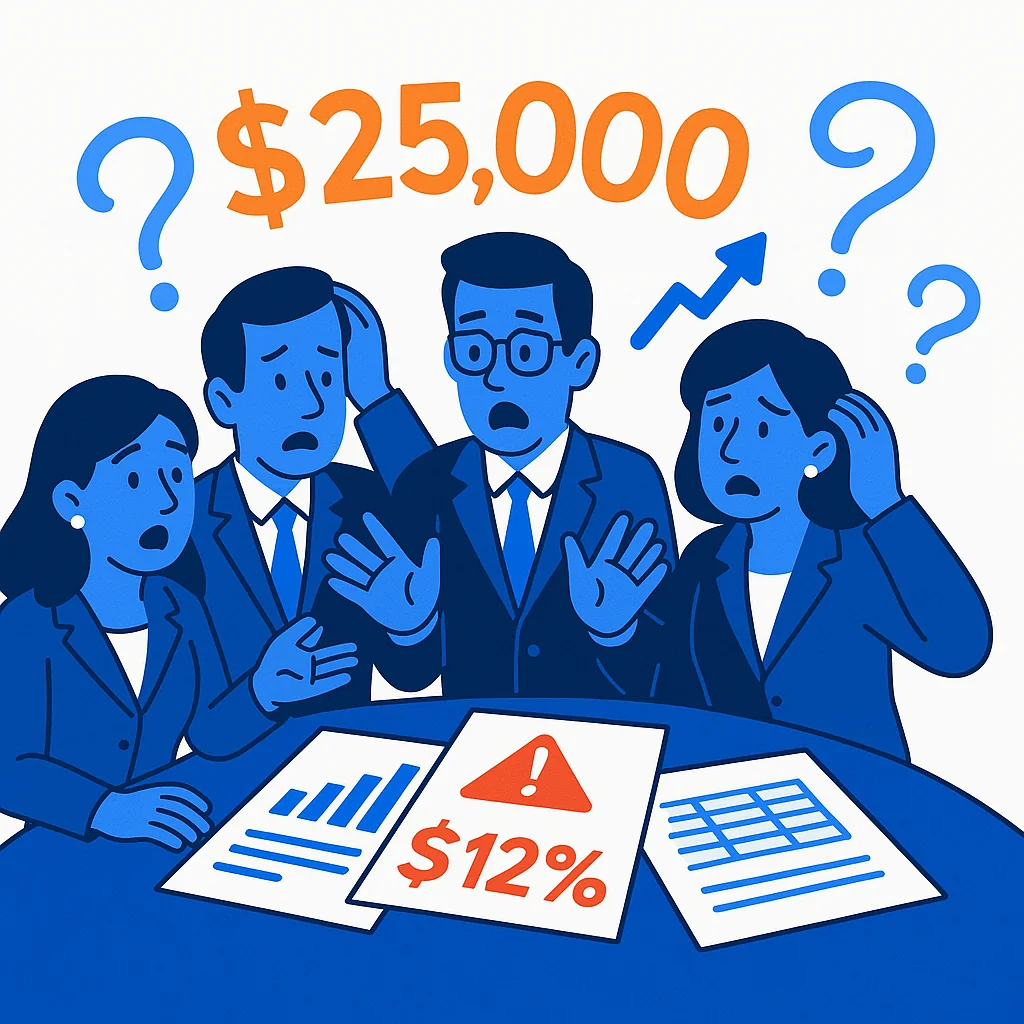
Part 4 of 4: Why the Traditional Audit-Fix-Reaudit Cycle Keeps CFOs Awake at Night I was on an initial sales…...
 October 10 11 min read
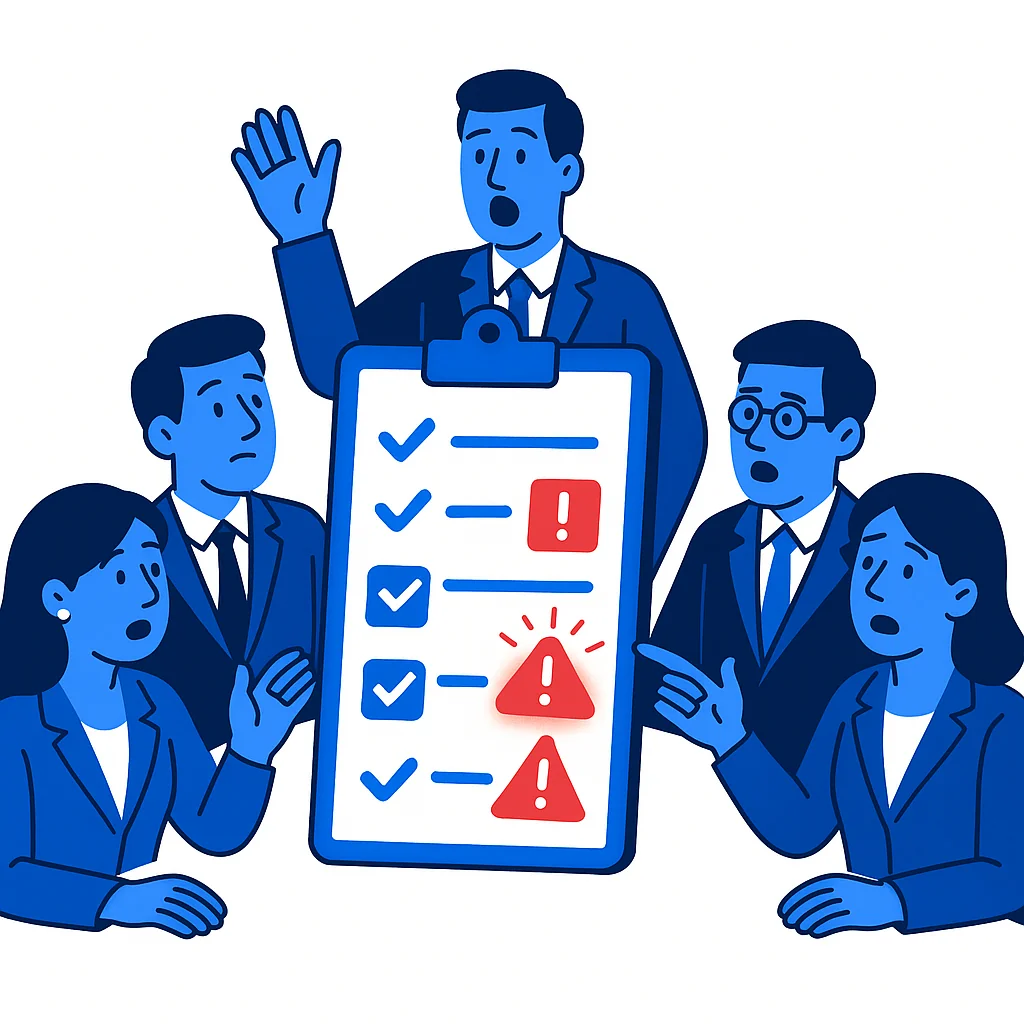
I was on a call last month with a marketing director who perfectly captured something I encounter almost weekly. “We’ve…...
 October 03 12 min read
I got an email last week that made me both laugh and cringe at the same time. A procurement manager…...
 July 31 9 min read
Why We Recommend Managed Accessibility Ops Over Traditional Audits When potential clients reach out to Accessiblü, most ask for the…...
May 28 16 min read
Ensuring that the technology your organization purchases is accessible to all users isn’t just a nice-to-have—it’s essential. But if you’re…...
 April 28 12 min read
In today’s digital landscape, accessibility isn’t just a nice-to-have—it’s increasingly becoming a business imperative. If you’re a CEO, CTO, or…...
March 23 5 min read
In the digital age, where customer satisfaction and brand loyalty drive success, ensuring your digital assets are accessible is not…...
 February 25 7 min read
In recent months, federal actions and political movements have sought to dismantle or discourage Diversity, Equity, and Inclusion (DEI) initiatives…...
 February 11 8 min read
ADA Title II: Understanding the New DOJ Rule: What State & Local Leaders and Businesses Need to Know What the…...
 November 21 6 min read
In today’s digital-first landscape, accessibility is not just a compliance checkbox—it is a sound business strategy. Companies that prioritize digital…...
 September 30 10 min read
Digital accessibility is a critical challenge for many organizations. As an executive, you may be grappling with the complexities of…...
 September 23 7 min read
In today’s digital age, web accessibility has emerged as a crucial element for ensuring that individuals of all abilities can…...
 September 19 11 min read
Digital accessibility is a complex challenge. Businesses often struggle to know where to start, lacking a clear understanding of how…...
 September 05 8 min read
Digital accessibility presents a significant challenge for company executives. Many leaders mistakenly view it as a simple fix or an…...