

Gap Analysis: The Strategic Edge Over Traditional Accessibility Audits

Jeffrey Rodgers
April 03 11 min read Image Caption
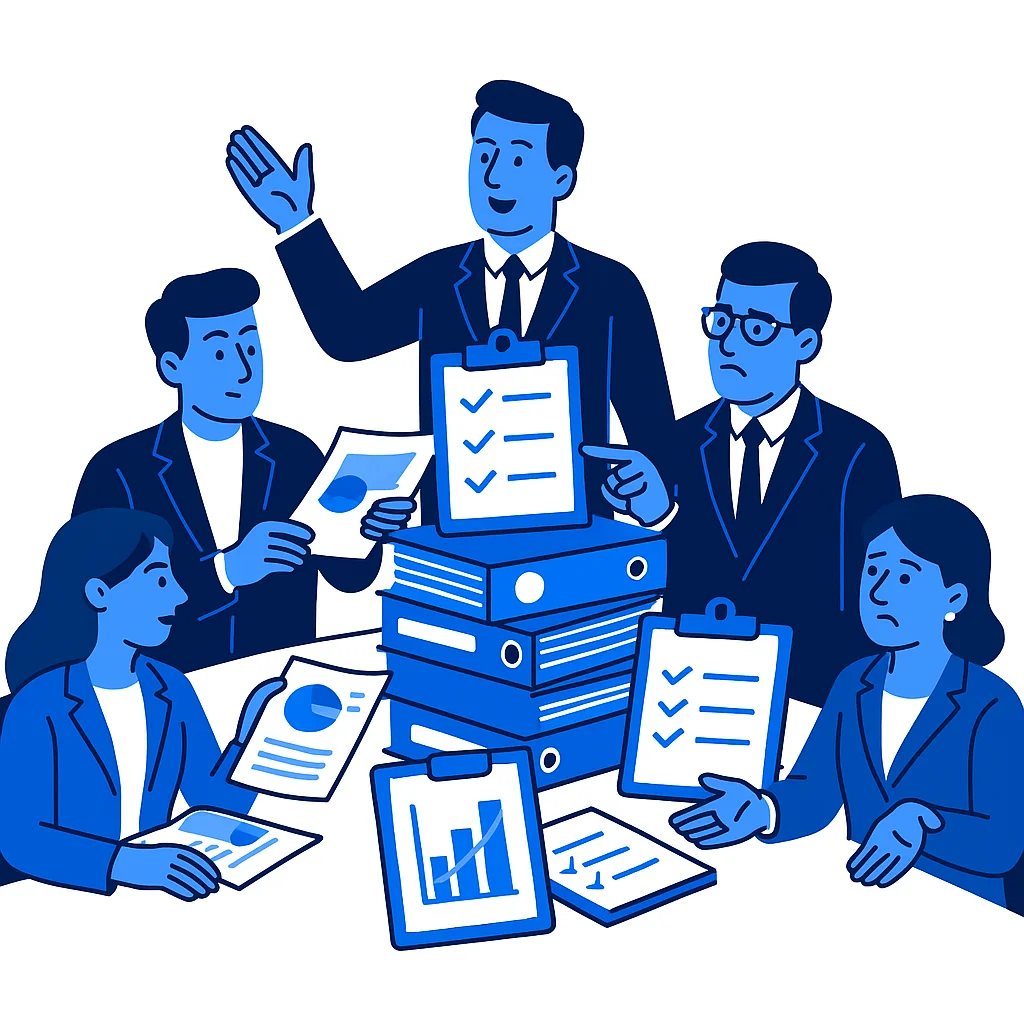
In my years leading digital accessibility initiatives, I’ve witnessed a recurring pattern: organizations invest heavily in accessibility audits, only to find themselves overwhelmed by lengthy reports and unsure how to proceed.
These companies believe they’re taking the right step toward compliance, but they’re often left with more questions than answers and little tangible progress toward making their digital properties truly accessible.
This disconnect between audit and implementation isn’t just frustrating—it’s costly, inefficient, and ultimately fails to serve the people who matter most: users with disabilities who need access to your digital content and services.
The Limitations of the Traditional Audit-Only Approach
Many organizations approach digital accessibility as a one-time compliance checkpoint. They commission an audit, receive a comprehensive report of WCAG violations, and assume that fixing those issues will solve their accessibility challenges. This approach fundamentally misunderstands the nature of digital accessibility.
Consider this analogy: thinking an audit alone will solve accessibility problems is like believing that installing antivirus software and a firewall is sufficient for cybersecurity. Both scenarios ignore the dynamic, evolving nature of the challenge and the need for ongoing vigilance and adaptation.
Why Audits Fall Short
The traditional audit process typically follows this pattern:
- Commission a comprehensive WCAG audit
- Wait weeks for a detailed report
- Receive dozens or hundreds of pages documenting violations
- Attempt to prioritize issues without clear guidance
- Struggle to implement fixes with limited expertise
- Commission another audit months later
- Repeat the cycle
This approach fails for several reasons:
- It’s reactive rather than proactive: Audits identify problems after they’re created rather than preventing them.
- It’s cyclical rather than continuous: The audit-remediate-audit cycle creates starts and stops rather than continuous improvement.
- It’s diagnostic without being prescriptive: Most audits tell you what’s wrong but provide limited guidance on how to fix issues.
- It treats accessibility as separate from development: Rather than integrating accessibility into the development process, it becomes an afterthought.
All of this is crucial if you are thinking about having an “audit” done. Don’t – It only benefits the audit companies! You’re forced to pay for each round of audits and you get NO support for helping to fix the issues.
The Complex Reality of Modern Digital Ecosystems
Today’s organizations manage intricate digital ecosystems that extend far beyond a single website. Consider the complexity faced by these sectors:
Government Entities (Title II Compliance)
Cities, counties, and state agencies typically manage:
- Multiple public-facing websites
- Citizen service portals
- Online payment systems
- Public records databases
- Election information and voting resources
- Emergency notification systems
- Interactive GIS mapping tools
- Hundreds of PDF forms and documents
Each component must meet WCAG standards, yet traditional audits often miss the interconnections between these systems and how users with disabilities navigate across them.
Not to mention that these organizations have to comply with Title I (employees), Title II (public), and Section 508 (employees and public). A web-audit alone will leave you a lot of gaps.
Educational Institutions (Title II Compliance)
Schools, colleges, and universities operate:
- Public websites
- Student information systems
- Learning management systems
- Library resources and databases
- Course registration platforms
- Financial aid applications
- Housing management systems
- Digital textbooks and learning materials
- Virtual classrooms and video content
A gap in accessibility in any one of these systems can prevent a student with disabilities from completing their education, yet traditional audits rarely capture the full student journey.
eCommerce and Business Operations
Businesses must ensure accessibility across:
- Customer-facing websites
- Product catalogs
- Shopping carts and checkout processes
- Account management interfaces
- Customer service portals
- Marketing emails and newsletters
- Mobile applications
- Third-party integrations for payment processing
- Inventory management systems
When a traditional audit identifies issues on the main website but misses critical barriers in the checkout process, the business remains vulnerable to complaints and litigation while losing potential customers.
Critical Digital Assets Beyond Websites
WCAG conformance extends to all digital content, including:
- PDF documents (manuals, reports, brochures)
- Excel spreadsheets and data tables
- PowerPoint presentations
- Fillable forms
- Video and audio content
- Interactive applications
- Downloadable resources
- Email communications
Many organizations fail to include these assets in their accessibility strategy, despite their critical importance to users.
Legal, Educational, and Financial Transactions
WCAG explicitly requires that all processes necessary for legal, educational, and financial transactions be fully accessible. This includes:
- Contract signing
- Account creation
- Course enrollment
- Tax filing
- Bill payment
- Application submission
- Document generation
- Tests, and assignments
A traditional audit might check if a form is technically accessible but misses whether a user with disabilities can actually complete the entire transaction.
The Gap Analysis Approach: A Strategic Alternative
After years of helping organizations navigate accessibility challenges, I’ve found that a structured gap analysis provides a more effective starting point than a traditional audit. Here’s how this approach works and the benefits it delivers:
Step 1: Discovery and Scope Definition
What we need from your organization:
- Access to all digital properties and assets
- Documentation of current systems and workflows
- Identification of primary user journeys and critical paths
- Historical accessibility efforts and any previous audit reports
- Key stakeholder availability for interviews
- Analytics data on most-used features and content
What our accessibility team provides:
- Initial assessment of critical user paths
- Identification of major accessibility barriers
- Preliminary evaluation of technical infrastructure
- Review of organizational governance and workflows
- Analysis of current development practices
- Assessment of content creation processes
This first step creates a map of your digital ecosystem and identifies the most critical points where accessibility barriers impact users. Unlike an audit that might sample pages across your site, we focus on understanding the complete user journey.
Real-world impact: During a recent project with a state government agency, our discovery process revealed that their most-used citizen services portal—accounting for over 60% of all user interactions—had been excluded from previous audits. This oversight left thousands of users unable to access essential services, despite the agency having “passed” multiple audits.
Step 2: Targeted Evaluation and Strategic Prioritization
What we need from your organization:
- Subject matter experts to explain complex functionality
- User demographics and behavior data
- Business priorities and timing constraints
- Development roadmap and release schedules
- Resource availability for remediation
- Budget parameters and constraints
What our accessibility team provides:
- Critical issue identification across platforms
- Risk assessment based on user impact and legal exposure
- Technical complexity analysis of required fixes
- Opportunity assessment for quick wins
- Prioritized action plan with clear milestones
- Resource requirements for implementation
Rather than producing an exhaustive list of every WCAG violation, this step focuses on identifying the highest-impact issues and creating a strategic plan based on user impact, legal risk, and implementation complexity.
Real-world impact: For a university client, this prioritization helped us identify that screen reader compatibility issues with their course registration system were causing the most significant barriers for students with disabilities. By focusing remediation efforts there first, rather than on minor issues flagged in a traditional audit, they enabled 38 students with visual impairments to register for classes independently for the first time.
Step 3: Knowledge Transfer and Capacity Building
What we need from your organization:
- Development team availability for training
- Content creator participation in workshops
- Leadership buy-in for process changes
- Allocation of time for skill development
- Commitment to applying new knowledge
- Feedback on training effectiveness
What our accessibility team provides:
- Role-specific accessibility training
- Hands-on remediation workshops
- Documentation of best practices for your specific technologies
- Templates and guides for common scenarios
- Code libraries and component examples
- Evaluation tools and testing methodologies
This step addresses a fundamental limitation of the audit model: the lack of internal expertise to implement and maintain accessibility. By transferring knowledge to your team while addressing actual issues, we build sustainable capability.
Real-world impact: Working with an eCommerce client, we conducted hands-on workshops with their development team while simultaneously addressing critical checkout flow issues. This approach not only fixed immediate problems but also empowered the team to prevent similar issues in future releases. The result was a 23% increase in conversion rates for users with assistive technologies.
Step 4: Remediation and Workflow Integration
What we need from your organization:
- Development resources for implementation
- Testing environments and staging areas
- Content update capabilities and access
- Quality assurance team involvement
- Project management support
- User acceptance testing participation
What our accessibility team provides:
- Technical remediation guidance
- Code-level solutions for complex issues
- Content remediation strategies
- Testing and validation procedures
- Integration of accessibility into existing workflows
- Documentation of changes for future reference
Instead of leaving your team to interpret an audit report, we provide direct support during the remediation process, ensuring that fixes are implemented correctly and efficiently while establishing processes that prevent similar issues in the future.
Real-world impact: Instead of waiting months for a full remediation cycle following an audit, we helped a financial services firm address their most critical form accessibility issues within three weeks. This rapid improvement dramatically reduced form abandonment rates and prevented potential legal complaints that were brewing due to inaccessible mortgage application forms.
Step 5: Sustainable Governance and Monitoring
What we need from your organization:
- Designated accessibility ownership
- Integration points with existing processes
- Feedback mechanisms for users
- Commitment to regular reviews
- Resource allocation for ongoing maintenance
- Executive sponsorship for sustainability
What our accessibility team provides:
- Ongoing monitoring framework
- Governance recommendations
- Role and responsibility definitions
- Escalation protocols for new issues
- Performance metrics and reporting templates
- Long-term roadmap for continuous improvement
This final step ensures that accessibility becomes an integrated part of your organization’s operations rather than a periodic compliance exercise. By establishing clear governance and monitoring processes, we help you maintain accessibility over time.
Real-world impact: For a retail client, we established a monthly accessibility review process integrated with their existing sprint planning. This approach ensured that new features maintained accessibility standards while gradually improving legacy content. Over 18 months, they achieved WCAG conformance across their entire site without the disruption and cost of a massive remediation project.
The ROI Advantage of Gap Analysis vs. Traditional Audits
The gap analysis approach delivers significantly better return on investment in several quantifiable ways:
- Faster time-to-compliance: Critical issues are addressed in weeks rather than months or years. One client reduced their time to address high-priority WCAG issues from 14 months to just 8 weeks.
- Reduced remediation costs: By building accessibility expertise within your team, you reduce dependency on external vendors. A healthcare client reduced their accessibility consulting costs by 62% in the second year after adopting this approach.
- Lower legal exposure: High-risk areas are identified and remediated first, reducing the likelihood of complaints or lawsuits. A retail client avoided a potential class action by identifying and fixing critical shopping cart accessibility issues before they generated significant user complaints.
- Improved user experience for everyone: Accessibility improvements benefit all users, not just those with disabilities. An insurance client saw overall form completion rates increase by 18% after implementing accessibility improvements.
- Sustainable compliance: Instead of the expensive audit-remediate-audit cycle, you develop processes that maintain accessibility over time. A government client eliminated the need for annual comprehensive audits, saving over $80,000 per year.
In one striking case study, a client had spent over $100,000 on repeated audits over three years with minimal progress toward WCAG compliance. Within six months of switching to our gap analysis approach, they had addressed their highest-risk issues and developed internal capability to maintain accessibility—all while spending less than they had on their previous audit cycle.
Beyond Compliance: Building an Accessibility Culture
Perhaps the most significant advantage of the gap analysis approach is cultural: accessibility becomes everyone’s responsibility rather than a periodic compliance exercise. I’ve watched organizations transform from viewing accessibility as a burden to recognizing it as a competitive advantage that expands their market and improves experiences for all users.
This cultural shift occurs because:
- Teams learn by doing: Rather than treating accessibility as abstract guidelines, team members develop practical skills by addressing real issues.
- Accessibility becomes proactive: Instead of fixing problems after they’re created, teams learn to prevent them from occurring.
- Users see continuous improvement: Rather than waiting months or years for major updates, users experience incremental improvements regularly.
- Cross-functional collaboration increases: The gap analysis approach brings together designers, developers, content creators, and business stakeholders in a unified effort.
- Accessibility becomes a quality attribute: Teams begin to see accessibility as an inherent aspect of quality rather than a separate compliance requirement.
Conclusion: Choosing the Strategic Path Forward
In my experience working with organizations across sectors, those that approach accessibility as an ongoing journey rather than a destination are the ones that truly succeed. The gap analysis approach isn’t just more efficient—it fundamentally changes how organizations think about and implement inclusive design.
Traditional WCAG audits will always have their place, particularly for baseline measurements and formal conformance verification. However, starting with a strategic gap analysis provides a more effective path to meaningful accessibility improvements and sustainable WCAG compliance.
When we partner with clients, we’re not just finding issues—we’re building capacity, changing processes, and creating sustainable accessibility that evolves with their business needs. That’s something no audit alone can ever accomplish.
If your organization is ready to move beyond the audit-remediate-audit cycle and establish a strategic approach to digital accessibility, a gap analysis offers the proven path forward.
About the Author: As the manager of the digital accessibility division at Accessiblü, I’ve guided organizations through the complex journey toward truly inclusive digital experiences. Our direct-to-expert, concierge-style approach has helped clients across government, education, healthcare, and commerce achieve sustainable accessibility while building internal capability.
 October 22 10 min read
If you think accessibility compliance testing means running a quick automated scan and checking your site with one screen reader,…...
 October 03 12 min read
I got an email last week that made me both laugh and cringe at the same time. A procurement manager…...
 August 06 11 min read
How the traditional audit-first approach keeps businesses stuck in an expensive cycle of non-compliance—and what actually works instead. If you’re…...
July 31 9 min read
Why We Recommend Managed Accessibility Ops Over Traditional Audits When potential clients reach out to Accessiblü, most ask for the…...
 April 28 12 min read
In today’s digital landscape, accessibility isn’t just a nice-to-have—it’s increasingly becoming a business imperative. If you’re a CEO, CTO, or…...
March 23 5 min read
In the digital age, where customer satisfaction and brand loyalty drive success, ensuring your digital assets are accessible is not…...
 September 19 11 min read
Digital accessibility is a complex challenge. Businesses often struggle to know where to start, lacking a clear understanding of how…...
 September 05 8 min read
Digital accessibility presents a significant challenge for company executives. Many leaders mistakenly view it as a simple fix or an…...
 August 28 9 min read
In today’s digital-first world, ensuring your website, desktop applications, and mobile apps are accessible is not just a matter of…...
 August 28 5 min read
Are you responsible for ensuring digital accessibility on your company’s website, app, or digital assets? Then you know that in…...
July 01 9 min read
Ensuring digital accessibility is a crucial responsibility, yet interpreting and addressing the findings from accessibility audits can pose significant challenges…...
 June 28 7 min read
In today’s interconnected world, mobile applications serve as gateways to information, services, and experiences for diverse audiences. However, ensuring these…...
April 18 4 min read
Accessiblü Insight: Audits vs. Testing This Ablü Insight focuses on the differences between accessibility audits and testing. Clients are often…...
April 10 10 min read
In a significant move towards inclusivity, the Department of Justice (DOJ) recently issued a final rule under Title II of…...
March 15 12 min read
Knowing what to ask for in an accessibility contract or Request For Proposal (RFP) will help ensure that you get…...
 December 20 14 min read
Looking to improve your website’s accessibility in 2024? Don’t worry; our digital accessibility plan has you covered! Entering a new…...
December 11 10 min read
As businesses increasingly recognize the importance of creating inclusive digital experiences, there is a growing demand for manual accessibility audits.…...
 December 01 10 min read
In today’s digital landscape, web accessibility is essential to ensuring equal access and inclusion for all users. Accessibility overlays have…...
November 07 11 min read
When it comes to evaluating the accessibility of your website or app, understanding which type of audit report is best…...
 September 18 15 min read
Accessibility is a fundamental aspect that all website owners and developers should consider. Understanding how people with disabilities navigate the…...
June 29 14 min read
Businesses ready to make accessibility a priority often encounter a barrier of their own, determining the cost of a website…...
 June 09 10 min read
Ensuring web accessibility is crucial for creating inclusive digital experiences that enable people with diverse abilities to access and interact…...
 October 31 11 min read
Over the years of working with businesses on accessibility conformance, we’ve seen the same mistakes made over and over again.…...
 August 19 9 min read
Digital Overlays are not accessible, and are not ADA compliant. Good web design from the beginning or an accessibility audit…...
August 12 9 min read
Digital Overlays are not accessible, and are not ADA compliant. Good web design from the beginning or an accessibility audit…...
 May 16 5 min read
Global Accessibility Awareness Day (GAAD) is every third Thursday in May – this year it is May 19, 2022 On…...
 October 15 5 min read
Website ADA audits are typically the initial offering from the accessibility industry; they promise to find all of the accessibility…...
 September 03 5 min read
TLDR: Ask your accountant about the Disabled Access Credit. You can claim 50% of what you spend on web accessibility…...