

WCAG 3.0: A New Era in Digital Accessibility Standards!

Jeffrey Rodgers
December 13 6 min read Image Caption
Exciting news in the world of digital accessibility! We’re finally getting some juicy details about WCAG 3.0 – the next version version of the Web Content Accessibility Guidelines!
I can’t believe it’s been a year since WCAG 2.2 became the official recommendation. But just yesterday morning (12/12/24), I received an email from the W3C with details about WCAG 3.0 – It’s amazing how fast the W3C is moving!
WCAG 3.0 promises to shake things up by not only helping to make our online spaces more inclusive, but we expect an entirely new conformance system. Buckle up; it’s going to be an exciting ride!
Building on the foundation of WCAG 2.2, the upcoming guidelines aim to address the complexities of modern web technologies and better serve the diverse needs of people with disabilities.
Even though WCAG 3.0 is still a work in progress, it’s a big step to changing how we think about web accessibility.
In this article, we dive into the current state of WCAG 3.0, explore its development process, highlight the contributors shaping its progress, and examine its implications for accessibility standards. Additionally, we’ll look at how the W3C is reimagining digital conformance and the new concepts proposed for this ambitious project.
What is WCAG 3.0?
WCAG 3.0 is the successor to WCAG 2.2, expanding its scope to incorporate emerging technologies like virtual reality (VR), augmented reality (AR), and voice-based interfaces.
It seeks to address more disability needs, provide a more enduring structure to adapt to technological evolution, and redefine accessibility guidelines to be more inclusive and actionable.
The current draft is informative, not normative, meaning it is a work in progress and not yet an official W3C recommendation. WCAG 2.2 is still the current version and you should follow that.
The W3C is encouraging stakeholders to provide feedback to refine the guidelines. According to the W3C, WCAG 3.0 aims to replace all versions WCAG 2.x while drawing on lessons from over a decade of accessibility guidelines and emerging needs.
Development Process and Contributors
The Collaborative Framework
The journey to WCAG 3.0 began with the Silver Task Force and the Accessibility Guidelines Working Group (AG WG). Named “Silver” during its early development, the project united stakeholders from diverse backgrounds to envision the next generation of accessibility guidelines.
Notable contributors include representatives from the Library of Congress, Oracle, Intel, and organizations like Nomensa and TetraLogical. Of course, the AG WG does include accessibility experts and users of assistive technology.
The W3C encourages feedback and participation through GitHub repositories and email channels. Public input is integral to shaping the guidelines, as different parts of the draft range in maturity from placeholders to refined sections. The AG WG uses an iterative approach, releasing updated drafts twice a year for review.
Research and Prototypes
From 2017 to 2023, the Silver Task Force conducted extensive research to identify gaps in the existing WCAG framework. This research led to problem statements, prototype designs, and the early drafts of WCAG 3.0. Industry leaders also contributed insights to ensure the guidelines are both ambitious and practical.
Key Goals of WCAG 3.0
WCAG 3.0 is designed to:
- Address Broader Disability Needs
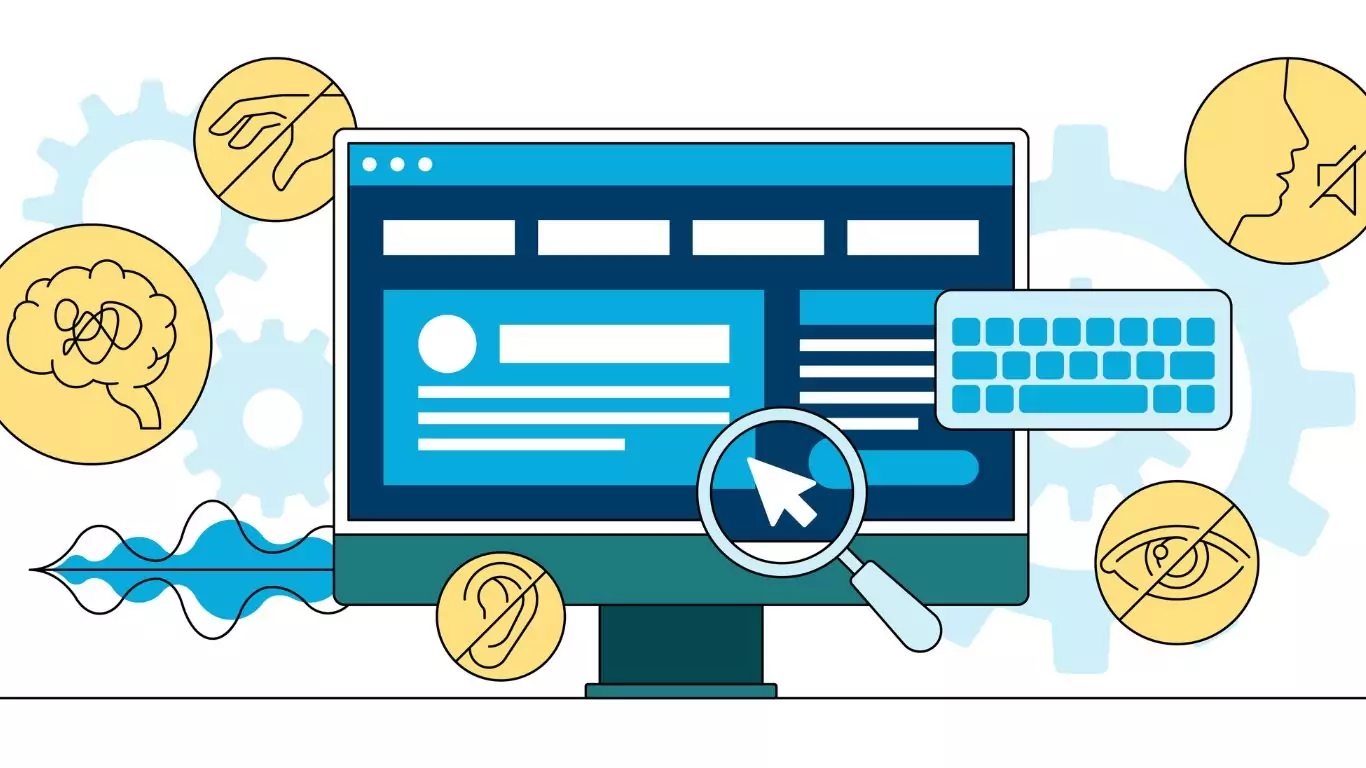
The guidelines aim to expand beyond visual impairments to include cognitive, auditory, physical, and speech-related disabilities.
- Incorporate Emerging Technologies
Modern platforms like XR (extended reality), voice interfaces, and dynamic content require a fresh approach to accessibility.
- Foster Global Inclusion
By recruiting a diverse range of contributors and soliciting feedback worldwide, the W3C strives to make WCAG 3.0 a truly inclusive standard.
- Simplify Maintenance and Adoption
The modular structure of WCAG 3.0 ensures it can adapt to changing technologies, reducing barriers to long-term compliance.
Structure of WCAG 3.0
The guidelines are organized into several components:
- Guidelines: High-level, user-centered outcome statements that are technology-agnostic and written in plain language.
- Foundational Requirements: Normative statements that address essential accessibility barriers, similar to WCAG 2.x’s Level AA.
- Supplemental Requirements: Advanced criteria for higher conformance levels.
- Assertions: Formal claims of accessibility processes, supporting the foundational and supplemental requirements.
- Methods: Informative techniques for meeting guidelines, including examples and tests.
This layered structure provides flexibility, enabling organizations to meet basic requirements while striving for higher levels of accessibility.
Reimagining Conformance
One of the most anticipated changes in WCAG 3.0 is its conformance model, which departs from the familiar Level A, AA, and AAA framework. Instead, it introduces:
Foundational Requirements: Basic, non-negotiable criteria comparable to Level AA.
Supplemental Requirements: Advanced guidelines to encourage organizations to exceed minimum accessibility standards.
Scoring Models: Points, percentages, or modules to evaluate higher conformance levels.
The conformance model emphasizes a nuanced approach, recognizing progress beyond binary “pass or fail” evaluations. Concepts like adjectival ratings (e.g., Fail, Pass, Exceptional) and pre-assessment checks are also under consideration.
For years, the concept of deciding how a criterion “passes” or is “met” has been one of the biggest criticisms of the current WCAG 2.x models. Some argue that the decision made by the evaluator is too objective and that not all accessibility criteria can be measured as a pass/failure.
At Accessiblü, we like to say that accessibility is a human problem that requires a human solution. The new WCAG 3.0 model seems to reflect that.
Incorporating Accessibility-Supported Technologies
WCAG 3.0 introduces the idea of “accessibility-supported” methods. These ensure that developers can rely on proven techniques that work across assistive technologies and platforms. While foundational conformance assumes broad accessibility support, higher levels require rigorous testing with user agents and assistive devices.
This approach acknowledges the diversity of web environments and aims to balance flexibility with accountability.
Current Challenges and Feedback Areas
The W3C has identified several areas requiring further research and community feedback:
- Image Alternatives: Ensuring alternative text guidelines are comprehensive and actionable.
- Keyboard Focus Appearance: Improving guidelines for keyboard navigation.
- Clear Meaning: Addressing cognitive accessibility barriers through clearer language requirements.
- Conformance: Finalizing the new conformance model to ensure it is practical and effective.
The group encourages stakeholders to test drafts and share insights on these and other emerging guidelines. That’s something Accessiblü will be doing with some of our clients.
Timeline and Next Steps
The WCAG 3.0 project is slated to run through at least 2025, with continuous updates to the drafts. The guidelines will not become a W3C recommendation until they match the scope of WCAG 2.2 and incorporate sufficient stakeholder feedback.
I anticipate WCAG 3.0 becoming a recommendation around 2027.
To stay informed, visit the WCAG 3.0 introduction page or track updates via the W3C GitHub repository.
Implications for the Future of Accessibility
The development of WCAG 3.0 reflects a commitment to a more inclusive and equitable digital world. By addressing gaps in current standards and embracing technological advances, WCAG 3.0 has the potential to reshape how accessibility is defined and implemented.
For developers, this evolution means adopting new practices, tools, and testing methods. For organizations, it underscores the importance of accessibility as a cornerstone of digital innovation. Ultimately, WCAG 3.0 is more than a set of guidelines—it’s a vision for a web that works for everyone.
Conclusion
As WCAG 3.0 progresses, the W3C is inviting collaboration from across industries and communities. By participating in its development, we can help create a standard that not only meets today’s challenges but anticipates the needs of tomorrow. Together, we can build a more accessible digital future!
 September 29 7 min read
I wrote about WCAG 3.0 in December 2024, when it still felt more like a rumor than a real document.…...
 March 30 9 min read
Every spring, WebAIM publishes its annual analysis of the top one million home pages on the web, scanning each one…...
 August 29 15 min read
Let’s talk about something: your website’s accessibility statement. If you’re in the C-suite or on the legal team, you’ve probably wondered…...

 June 23 12 min read
Let’s be honest—diving into WCAG (Web Content Accessibility Guidelines) can feel like trying to read a technical manual written by…...
June 09 11 min read
If you’ve ever tried to dive into WCAG (Web Content Accessibility Guidelines), you might have felt like you were…...
 May 02 9 min read
May 15th marks Global Accessibility Awareness Day (GAAD), a worldwide event dedicated to raising awareness about digital accessibility and inclusion.…...
 April 28 12 min read
In today’s digital landscape, accessibility isn’t just a nice-to-have—it’s increasingly becoming a business imperative. If you’re a CEO, CTO, or…...
 February 11 8 min read
ADA Title II: Understanding the New DOJ Rule: What State & Local Leaders and Businesses Need to Know What the…...
 November 08 8 min read
Before joining Accessiblü, I spent 20 years as an instructional designer, accessibility specialist, and LMS administrator in higher education. In…...
 October 28 22 min read
As AI continues to evolve, it’s shaking things up in the world of web crawling and search. AI-powered crawlers are…...
 September 30 10 min read
Digital accessibility is a critical challenge for many organizations. As an executive, you may be grappling with the complexities of…...
 September 19 11 min read
Digital accessibility is a complex challenge. Businesses often struggle to know where to start, lacking a clear understanding of how…...
 September 16 9 min read
As the digital space continues to play a crucial role in modern political campaigns, accessibility remains a key concern that…...
September 05 8 min read
Digital accessibility presents a significant challenge for company executives. Many leaders mistakenly view it as a simple fix or an…...
 August 28 9 min read
In today’s digital-first world, ensuring your website, desktop applications, and mobile apps are accessible is not just a matter of…...
 August 28 5 min read
Are you responsible for ensuring digital accessibility on your company’s website, app, or digital assets? Then you know that in…...
July 01 9 min read
In the realm of web accessibility, automated accessibility tools are often hailed as a panacea, promising comprehensive evaluations with the…...
April 25 3 min read
Accessiblü Insight This Ablü Insight focuses on how to properly use ARIA (Accessible Rich Internet Applications) labels. This is an…...
 March 15 12 min read
Knowing what to ask for in an accessibility contract or Request For Proposal (RFP) will help ensure that you get…...
 September 18 15 min read
Accessibility is a fundamental aspect that all website owners and developers should consider. Understanding how people with disabilities navigate the…...
 September 01 10 min read
There’s been a buzz about the new WCAG 2.2 update for over a year now. After a series of delays,…...
 June 09 10 min read
Ensuring web accessibility is crucial for creating inclusive digital experiences that enable people with diverse abilities to access and interact…...
 April 28 11 min read
Unlocking the Power of Accessibility: A Guide to Creating Inclusive Websites As web developers, we believe creating an accessible, inclusive,…...
 October 31 11 min read
Over the years of working with businesses on accessibility conformance, we’ve seen the same mistakes made over and over again.…...
 September 23 8 min read
JCC Digital Co-op, and The Jewish Community Centers online compliance for its members....
 September 02 10 min read
Web accessibility and compliance. A businesses websites needs to be compliant with the ADA laws....
 August 19 9 min read
Digital Overlays are not accessible, and are not ADA compliant. Good web design from the beginning or an accessibility audit…...
August 12 9 min read
Digital Overlays are not accessible, and are not ADA compliant. Good web design from the beginning or an accessibility audit…...