

Navigating the Complex Landscape of Digital Accessibility: A Guide for Executives

Jeffrey Rodgers
September 30 10 min read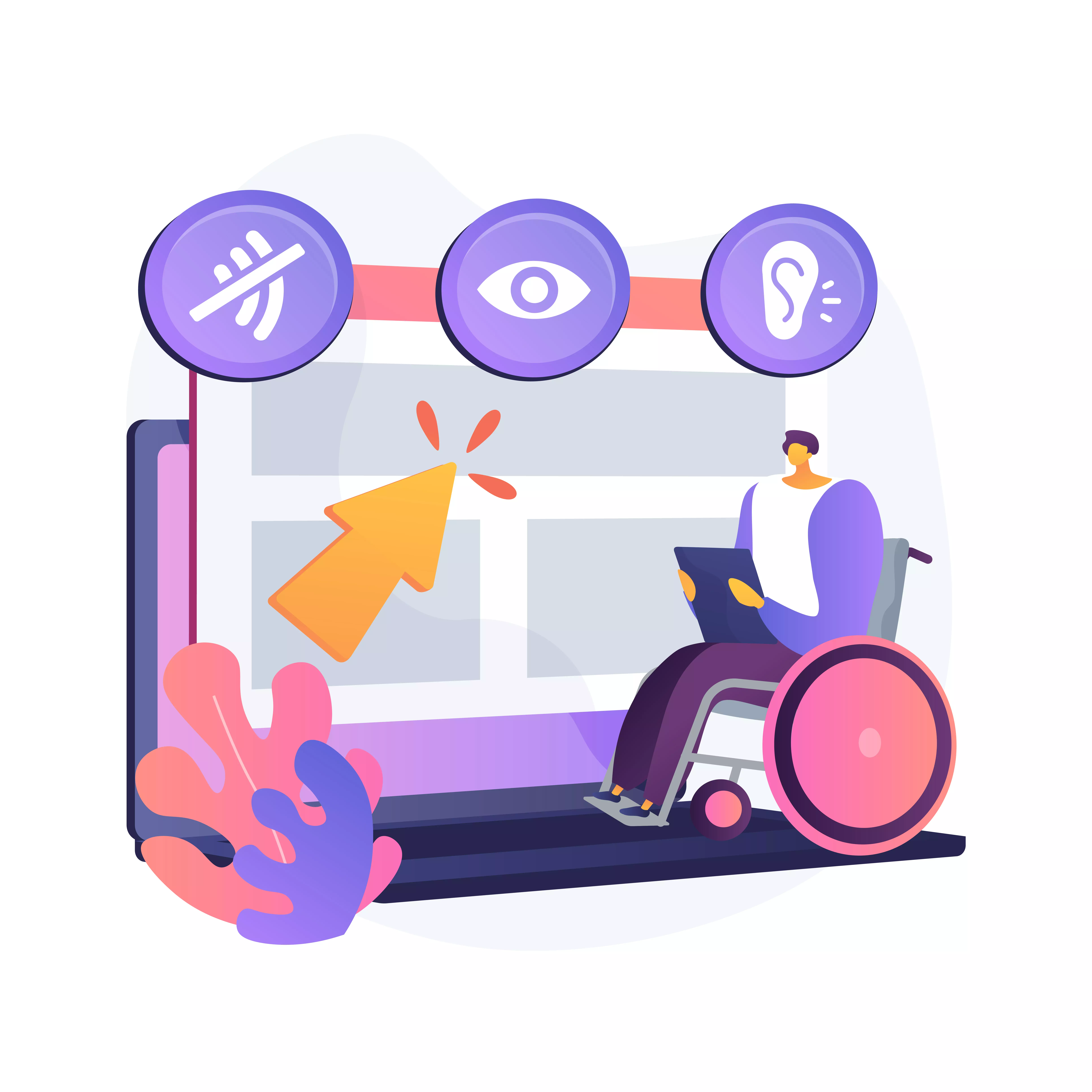 Image Caption
Digital accessibility is a critical challenge for many organizations. As an executive, you may be grappling with the complexities of ensuring your digital assets are accessible to all users, including those with disabilities. The lack of understanding surrounding Web Content Accessibility Guidelines (WCAG) and what it truly means to be accessible can leave you uncertain about where to begin.
You might be tempted to rely solely on automated tools or overlay solutions, believing they can address all your accessibility needs and shield you from potential lawsuits. However, this approach always falls short. True accessibility is far more nuanced and can only be accurately measured by those who depend on assistive technologies. The complexity of addressing accessibility issues extends beyond simple fixes, requiring a comprehensive strategy that considers diverse user needs.
It’s essential to approach digital accessibility with the same rigor you apply to other compliance issues within your company. But how can you begin to assess your organization’s current state of accessibility and develop a robust plan for improvement? Let’s explore the key principles of digital accessibility and provide actionable steps to enhance your digital inclusivity.
Understanding Digital Accessibility and Its Importance
Digital accessibility is not just a buzzword; it’s a fundamental aspect of creating inclusive digital experiences. At its core, it ensures that all users, regardless of their abilities, can fully engage with your digital content. This isn’t about catering to a niche group – it’s about opening your digital doors to everyone.
Think of digital accessibility as the virtual equivalent of wheelchair ramps and Braille signage in physical spaces. It’s about making your website, app, or digital product usable by people with various disabilities, including visual, auditory, motor, and cognitive impairments.
The WCAG 2.2 Framework: Your Accessibility Compass
The Web Content Accessibility Guidelines (WCAG) 2.2 provide a comprehensive framework for digital accessibility. These guidelines are built on four key principles:
- Perceivable: Can all users perceive your content?
- Operable: Can users navigate and interact with your interface?
- Understandable: Is your content and functionality clear to all?
- Robust: Is your content compatible with current and future technologies?
By aligning your digital assets with these principles, you’re not just ticking boxes – you’re creating a more inclusive and user-friendly experience for everyone.
Beyond Compliance: The Business Case for Accessibility
While legal compliance is a crucial driver for accessibility initiatives, the benefits extend far beyond avoiding lawsuits. Embracing digital accessibility can:
- Expand your market reach to millions of users with disabilities
- Improve overall user experience, benefiting all users
- Enhance your brand’s reputation as an inclusive and socially responsible organization
- Drive innovation by considering diverse user needs in your design process
Remember, accessibility improvements often lead to better usability for everyone. Clear navigation, well-structured content, and intuitive interfaces benefit all users, not just those with disabilities.
As you embark on your accessibility journey, keep in mind that it’s an ongoing process, not a one-time fix. It requires commitment, education, and a willingness to continually improve. By prioritizing digital accessibility, you’re not just complying with standards – you’re opening up a world of opportunities for your organization and your users.
Assessing Digital Accessibility Maturity
Now that you understand the importance of digital accessibility, how do you gauge where your organization stands? Assessing your digital accessibility maturity is crucial for charting a path forward. It’s not just about ticking boxes; it’s about truly understanding your current state and identifying areas for improvement.
Start by benchmarking against industry standards, particularly WCAG 2.2 Level AA. This provides a clear framework for evaluating your digital assets. But remember, compliance is just the beginning, not the end goal.
A comprehensive gap analysis is your next step. This goes beyond a simple audit, digging deep into your digital ecosystem to uncover accessibility barriers. It’s about understanding not just what’s lacking, but why, and how it impacts real users.
The Limitations of Automated Tools
While automated testing tools are valuable, they’re not a cure-all. They can catch many issues, but they miss nuanced problems that only human testers can identify. Don’t fall into the trap of relying solely on automation – it’s a starting point, not a complete solution.
Manual testing, especially by users with disabilities, is invaluable. These individuals can provide insights that no automated tool can match. They experience your digital assets as real users would, uncovering usability issues that might otherwise go unnoticed.
Remember, true accessibility can only be measured by those who rely on assistive technologies. Involving these users in your assessment process isn’t just good practice – it’s essential for creating genuinely inclusive digital experiences.
By combining automated tools, manual expert review, and testing with users with disabilities, you’ll gain a comprehensive understanding of your accessibility maturity. This holistic approach sets the stage for meaningful improvements and demonstrates your commitment to true inclusivity.
Accessiblü White Paper: Unveiling the Limitations of Automated Accessibility Tools
The Four Principles of WCAG 2.2: A Framework for Accessibility
To truly grasp digital accessibility, you need to understand the four core principles of WCAG 2.2. These principles – Perceivable, Operable, Understandable, and Robust (POUR) – form the foundation of accessible design. Let’s break them down:
Perceivable: Making Content Available to All Senses
Can users perceive your content, regardless of their sensory abilities? This principle focuses on making information presentable in ways that work for everyone. Key considerations include:
- Providing text alternatives for non-text content
- Ensuring sufficient color contrast
- Making content adaptable to different presentation methods
Operable: Enabling Navigation and Control
Is your interface operable by all users, including those relying on assistive technologies? This principle emphasizes:
- Full keyboard accessibility
- Providing enough time for users to read and use content
- Avoiding content that could cause seizures or physical reactions
Understandable: Ensuring Clarity and Predictability
Can users comprehend both the information and the operation of the user interface? This principle stresses:
- Making text readable and understandable
- Creating content that appears and operates in predictable ways
- Helping users avoid and correct mistakes
Robust: Maximizing Compatibility
Is your content compatible with current and future user tools? This principle focuses on:
- Maximizing compatibility with current and future user agents, including assistive technologies
- Ensuring proper markup and adherence to web standards
By embracing these principles, you’re not just meeting guidelines – you’re creating a more inclusive digital world. Remember, accessibility isn’t a checkbox; it’s an ongoing commitment to serving all users, regardless of their abilities or the technologies they use.
Beyond Audits: Implementing Effective Accessibility Strategies
Conducting an accessibility gap analysis is just the first step on your journey to digital inclusivity. Remember, an audit alone doesn’t solve anything – it’s what you do with that information that counts. So, how do you move from identifying issues to creating real, impactful change?
Prioritize and Remediate
Start by conducting a comprehensive gap analysis. This approach goes beyond a simple audit, helping you identify and prioritize the most critical accessibility barriers. Focus on issues that prevent users from accessing essential functions or understanding crucial content. These high-impact areas should be your first priority.
Embrace Inclusive Design
Don’t just retrofit accessibility—bake it into your design process from the start. Incorporate personas representing users with disabilities into your design thinking. This shift in perspective ensures that accessibility isn’t an afterthought but a fundamental aspect of your digital strategy.
Engage Real Users
While automated tools are helpful, they’re not enough on their own. Bring in users of assistive technologies to perform manual testing. Their insights are invaluable, uncovering issues that automated tools might miss and providing a real-world perspective on your digital accessibility.
Invest in Ongoing Education
Accessibility isn’t a one-and-done deal. It requires continuous learning and adaptation. Provide ongoing training for your developers, designers, and content creators. Ensure they’re up-to-date with the latest WCAG standards and understand how to apply accessibility principles in practice.
By implementing these strategies, you’re not just ticking boxes – you’re creating a culture of accessibility that will serve your organization and users well into the future. Remember, true accessibility is an ongoing journey, not a destination.
Article: Advantages of a Gap Analysis over Audits.
The Strategic Advantage of Prioritizing Digital Accessibility
Investing in digital accessibility isn’t just about avoiding legal pitfalls—it’s about seizing a competitive edge. By making your digital assets accessible to all, you’re not just doing the right thing; you’re opening doors to new opportunities and enhancing your brand’s value.
Think of accessibility as a catalyst for innovation. When you design with diverse needs in mind, you often stumble upon solutions that benefit everyone. For instance, captions originally intended for the deaf have become a must-have feature for viewers in noisy environments or those learning a new language.
By embracing inclusive design, you’re expanding your market reach. Consider this: about 15% of the world’s population lives with some form of disability. That’s a massive audience you could be tapping into. And remember, accessible design often leads to improved usability for all users, not just those with disabilities.
Moreover, prioritizing accessibility can significantly boost your brand’s reputation. In an era where consumers increasingly value corporate social responsibility, demonstrating a commitment to inclusivity can set you apart from competitors. It’s a powerful way to show that your organization truly cares about all its customers and users.
But the benefits don’t stop there. Accessible digital products often lead to:
- Improved SEO performance, as many accessibility practices align with search engine best practices
- Reduced maintenance costs in the long run, as accessible code tends to be cleaner and more structured
- Enhanced customer satisfaction and loyalty across all user groups
By viewing accessibility as a strategic advantage rather than a compliance checkbox, you’re positioning your organization for long-term success in an increasingly digital world. It’s not just about avoiding risks—it’s about embracing opportunities for growth, innovation, and meaningful connection with your audience.
Embracing Accessibility as a Core Business Strategy
Digital accessibility isn’t just a compliance checkbox—it’s a fundamental aspect of your business strategy. By approaching accessibility with the same attention as other critical business challenges, you position your organization for long-term success and innovation. Remember, a comprehensive gap analysis that includes testing by persons with disabilities is far more effective than relying solely on automated audits.
As you integrate accessibility into your core business practices, you’ll discover that it drives innovation, expands your market reach, and enhances your brand reputation. It’s not about doing something for a small group—it’s about creating digital experiences that work better for everyone. By prioritizing accessibility, you’re not just avoiding legal risks; you’re opening doors to new opportunities and demonstrating your commitment to inclusivity.
Ultimately, your journey towards digital accessibility is ongoing. It requires continuous learning, adaptation, and improvement. But by making this commitment, you’re not just meeting standards—you’re setting them. You’re creating a digital landscape where all users, regardless of their abilities, can fully engage with your content. And in doing so, you’re not just building a more accessible digital presence—you’re building a more successful, innovative, and inclusive organization.
 October 17 12 min read
Part 4 of 4: Why the Traditional Audit-Fix-Reaudit Cycle Keeps CFOs Awake at Night I was on an initial sales…...
 October 10 11 min read
I was on a call last month with a marketing director who perfectly captured something I encounter almost weekly. “We’ve…...
 October 03 12 min read
I got an email last week that made me both laugh and cringe at the same time. A procurement manager…...
 September 26 12 min read
Part 1 of 4: Why Getting Everyone on the Same Page About Digital Accessibility Feels Like Herding Cats Series Introduction:…...
 August 19 10 min read
It’s time someone has an honest conversation about VPATs. If you’re a business leader who’s been told you need a…...
 August 06 11 min read
How the traditional audit-first approach keeps businesses stuck in an expensive cycle of non-compliance—and what actually works instead. If you’re…...
 July 31 9 min read
Why We Recommend Managed Accessibility Ops Over Traditional Audits When potential clients reach out to Accessiblü, most ask for the…...
 June 23 12 min read
Let’s be honest—diving into WCAG (Web Content Accessibility Guidelines) can feel like trying to read a technical manual written by…...
June 09 11 min read
If you’ve ever tried to dive into WCAG (Web Content Accessibility Guidelines), you might have felt like you were…...
May 28 16 min read
Ensuring that the technology your organization purchases is accessible to all users isn’t just a nice-to-have—it’s essential. But if you’re…...
 April 28 12 min read
In today’s digital landscape, accessibility isn’t just a nice-to-have—it’s increasingly becoming a business imperative. If you’re a CEO, CTO, or…...
March 23 5 min read
In the digital age, where customer satisfaction and brand loyalty drive success, ensuring your digital assets are accessible is not…...
 February 25 7 min read
In recent months, federal actions and political movements have sought to dismantle or discourage Diversity, Equity, and Inclusion (DEI) initiatives…...
 February 11 8 min read
ADA Title II: Understanding the New DOJ Rule: What State & Local Leaders and Businesses Need to Know What the…...
 December 13 6 min read
Exciting news in the world of digital accessibility! We’re finally getting some juicy details about WCAG 3.0 – the next…...
 November 21 6 min read
In today’s digital-first landscape, accessibility is not just a compliance checkbox—it is a sound business strategy. Companies that prioritize digital…...
 September 23 7 min read
In today’s digital age, web accessibility has emerged as a crucial element for ensuring that individuals of all abilities can…...
 September 19 11 min read
Digital accessibility is a complex challenge. Businesses often struggle to know where to start, lacking a clear understanding of how…...
 September 16 9 min read
As the digital space continues to play a crucial role in modern political campaigns, accessibility remains a key concern that…...
 September 05 8 min read
Digital accessibility presents a significant challenge for company executives. Many leaders mistakenly view it as a simple fix or an…...
 August 28 9 min read
In today’s digital-first world, ensuring your website, desktop applications, and mobile apps are accessible is not just a matter of…...
 August 28 5 min read
Are you responsible for ensuring digital accessibility on your company’s website, app, or digital assets? Then you know that in…...
 July 01 9 min read
In the realm of web accessibility, automated accessibility tools are often hailed as a panacea, promising comprehensive evaluations with the…...
March 15 12 min read
Knowing what to ask for in an accessibility contract or Request For Proposal (RFP) will help ensure that you get…...
November 07 11 min read
When it comes to evaluating the accessibility of your website or app, understanding which type of audit report is best…...
 September 18 15 min read
Accessibility is a fundamental aspect that all website owners and developers should consider. Understanding how people with disabilities navigate the…...
 September 01 10 min read
There’s been a buzz about the new WCAG 2.2 update for over a year now. After a series of delays,…...
June 09 10 min read
Ensuring web accessibility is crucial for creating inclusive digital experiences that enable people with diverse abilities to access and interact…...
September 23 8 min read
JCC Digital Co-op, and The Jewish Community Centers online compliance for its members....
 August 19 9 min read
Digital Overlays are not accessible, and are not ADA compliant. Good web design from the beginning or an accessibility audit…...
August 12 9 min read
Digital Overlays are not accessible, and are not ADA compliant. Good web design from the beginning or an accessibility audit…...